
This guide is designed specifically for contractors, safety leaders, and workers in Hawai‘i who are responsible for identifying, managing, or working in environments where confined space hazards are present. Understanding confined space hazards is critical for ensuring worker safety, preventing serious injuries or fatalities, and maintaining compliance with OSHA and HI-OSHA regulations. Whether you are overseeing a construction project, managing facility maintenance, or working in the field, recognizing and controlling these hazards is essential to protect your team and your business.
To directly answer the search intent, here are the primary confined space hazards you must be aware of:
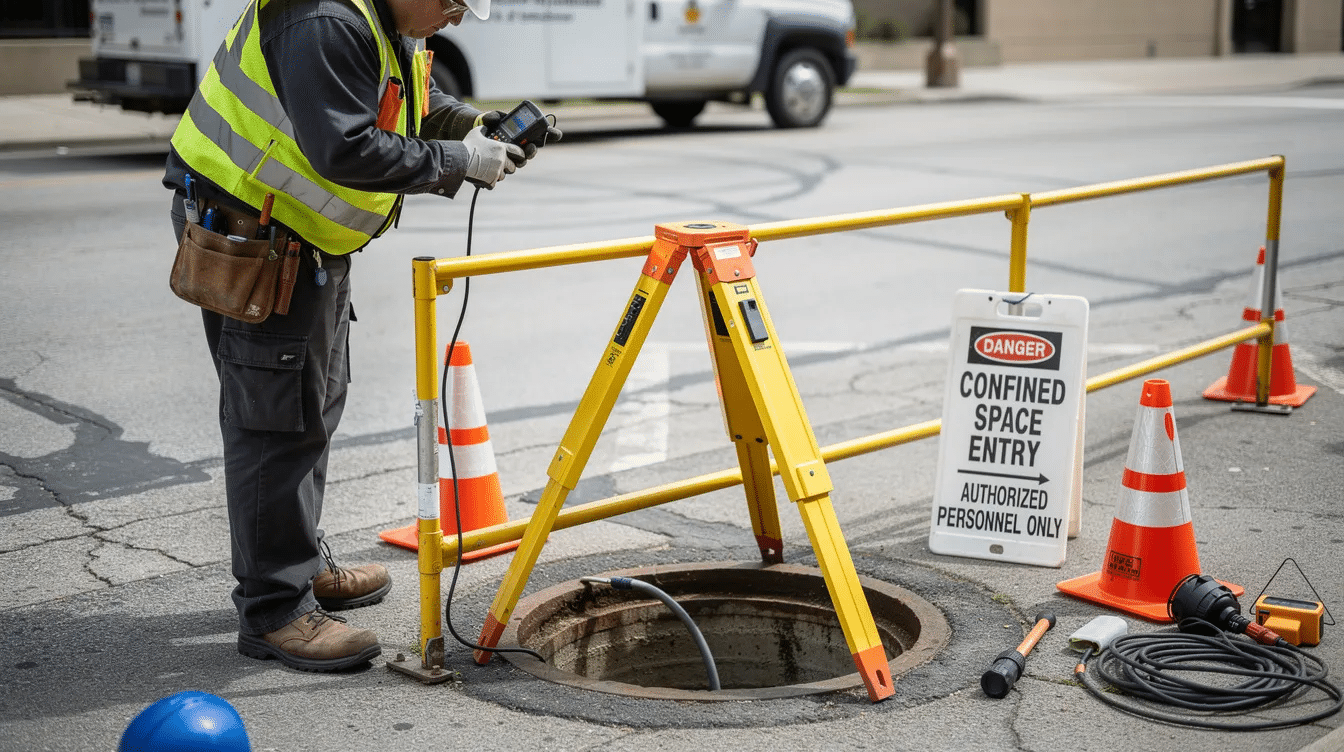
A confined space is defined as a space that is large enough for a worker to enter and perform work, has limited or restricted means for entry and exit, and is not designed for continuous employee occupancy. Under OSHA 29 CFR 1910.146(b), a confined space must meet all three criteria: large enough for entry, limited means of entry/exit, and not designed for continuous occupancy. Confined spaces are not intended for continuous occupancy due to design limitations such as inadequate ventilation and increased risk of atmospheric dangers. That last point means the space lacks permanent ventilation, lighting, or safe egress features intended for ongoing human activity.
Practical examples relevant to Hawai’i include:
Certain kinds of work activities or industries—such as telecommunications, electrical work, paper/pulp milling, shipbuilding, longshoring, and sewer work—may trigger additional OSHA regulations or safety procedures for permit-required confined spaces.
Trenches and excavations may also qualify as confined spaces when they exceed typical depth thresholds and exhibit restricted access or atmospheric issues like methane seepage—common in Hawai’i’s volcanic terrain. ABC Hawaii members in plumbing, electrical, roofing, and facility maintenance routinely encounter these during standard work.
OSHA distinguishes between basic confined spaces and permit required confined spaces (PRCS) under 29 CFR 1910.146 (general industry) and 1926 Subpart AA (construction). The distinction determines whether a written permit system is mandatory before anyone can enter confined spaces.
A PRCS contains—or may contain—a hazardous atmosphere, engulfment risk, inwardly converging walls, sloping floors, or other serious safety hazards. Concrete examples include:
Non-permit spaces have been evaluated and shown to lack these hazards, but must be re-evaluated when conditions change (hot work, new chemicals). The permit system requires written documentation of atmospheric testing results, PPE requirements, supervisor authorization, and entry duration before confined space work begins.
Confined space hazards include atmospheric hazards (such as oxygen deficiency and toxic gases), engulfment, and physical dangers. Confined spaces concentrate hazards that may be minor in open air but become fatal in enclosed volumes. Poor ventilation, limited mixing, and stratification allow dangerous conditions to develop rapidly and invisibly.
Primary hazard categories include:
These hazards often overlap—methane displacing oxygen in a sewer line, for example—and can worsen during routine tasks like cleaning, welding, or coating. Hazard recognition is the starting point of any ABC Hawaii confined space training or jobsite safety plan.
Atmospheric hazards are the leading cause of confined space incidents, responsible for over 50% of fatalities according to OSHA data. NIOSH reports more than 900 U.S. confined space deaths between 1980-2010, with 62% attributed to atmospheric causes. These hazards are often invisible, odorless, and immediately dangerous to life or health.
Limited natural ventilation in tanks, silos, and manholes allows toxic gases and other gases to accumulate and stratify. Visual detection is impossible. Multi-gas monitors must test oxygen levels first, then flammables (%LEL), then specific toxic contaminants like hydrogen sulfide and carbon monoxide before and during entry.
In Hawai’i’s humid climate, biological decomposition in cesspools, wastewater lift stations, and storm drains commonly generates H₂S and methane. A safe atmosphere at first test can become unsafe within minutes when solvents consume oxygen or tools introduce new vapors.
An oxygen-deficient atmosphere contains less than 19.5% oxygen by volume—normal air is about 20.9%. Health effects escalate rapidly: impaired judgment below 17%, risk of collapse around 12%, and unconsciousness and death below 6%. These are oxygen-deficient environments where workers cannot rely on their senses.
Mechanisms that displace oxygen include:
Consider a worker entering an underground valve vault on a Honolulu water project where corrosion and prior nitrogen purging have silently reduced oxygen—no odor, no warning. Relying on “feeling okay” is deadly; only calibrated gas monitors provide reliable readings.
An atmosphere with an oxygen content exceeding 23.5% dramatically accelerates combustion. Oxygen-enriched clothing and porous materials ignite easily from minor sparks, static discharge, or hot work, burning intensely and rapidly.
Common causes include leaking oxygen hoses on cutting torches, using pure oxygen instead of compressed air for ventilation, or faulty medical oxygen systems in building maintenance. Using oxygen to “freshen” air in a tank or manhole is strictly prohibited—a serious safety violation recognized across the industry.
Key toxic gases on construction and industrial sites include:
| Gas | Common Source | OSHA Concern |
|---|---|---|
| Hydrogen sulfide | Sewers, wastewater, cesspools | PEL 20 ppm ceiling; olfactory fatigue at 100 ppm |
| Carbon monoxide | Gas-powered tools, vehicles | 50 ppm TWA; 400 ppm IDLH |
| Solvent vapors | Coatings, cleaning agents | Varies by chemical |
| Carbon dioxide | Decomposition, fermentation | Displaces oxygen |
| A toxic atmosphere can form from stored residues, chemical reactions between cleaning agents, or migration through piping. Example: painting the interior of a water tank on Maui where solvent vapors quickly exceed safe limits in a poorly ventilated space—even with the hatch open. | ||
| Pre-entry monitoring, continuous atmospheric monitoring, and appropriate respiratory protection are essential when engineering controls cannot eliminate hazards. |
Flammable vapors pose fire and explosion risks when concentrations fall between lower and upper flammable limits (LFL/UFL). Gas monitors typically read %LEL. OSHA guidance requires halting entry when readings exceed 10% LEL and ventilating until levels are safe.
Hazard sources include:
Ignition sources range from welding and cutting to portable lights and static electricity. Picture a confined pump room at a resort property where a slow fuel leak and poor ventilation create explosive atmospheres during hot work—a scenario that demands immediate hazard control.
Even when the air is safe, physical hazards inside confined spaces cause traumatic injuries, entrapment, and fatalities. Core physical hazard types include engulfment, moving mechanical parts, electrical hazards, slips and falls, and structural collapse.
Combination hazards are common—engulfment in grain or sludge combined with oxygen deficiency and difficult rescue access. Hawai’i-specific scenarios include stormwater detention tanks flooding during heavy rain, sand hoppers at concrete batch plants, and elevator pits in multi-story buildings.
Engulfment occurs when workers are submerged, buried, or surrounded by water, sludge, sand, soil, or grain. Loose materials that seem solid—like grain or dried sludge—can behave like quicksand when disturbed, trapping workers in seconds under 100+ lbs/ft³ of pressure.
Control measures: isolate lines, lock out valves, drain or blank lines before entry, and never stand on stored material surfaces.
Typical mechanical hazards include rotating mixer shafts, conveyor systems, agitators, pump impellers, and fan blades. Electrical hazards involve exposed wires, energized circuits in wet vaults, and submerged equipment carrying voltage. Stored energy from hydraulic pressure or elevated loads can be released unexpectedly.
These hazards connect directly to OSHA lockout/tagout requirements—de-energizing, locking, tagging, and verifying zero energy before entry through proper tryout procedures.
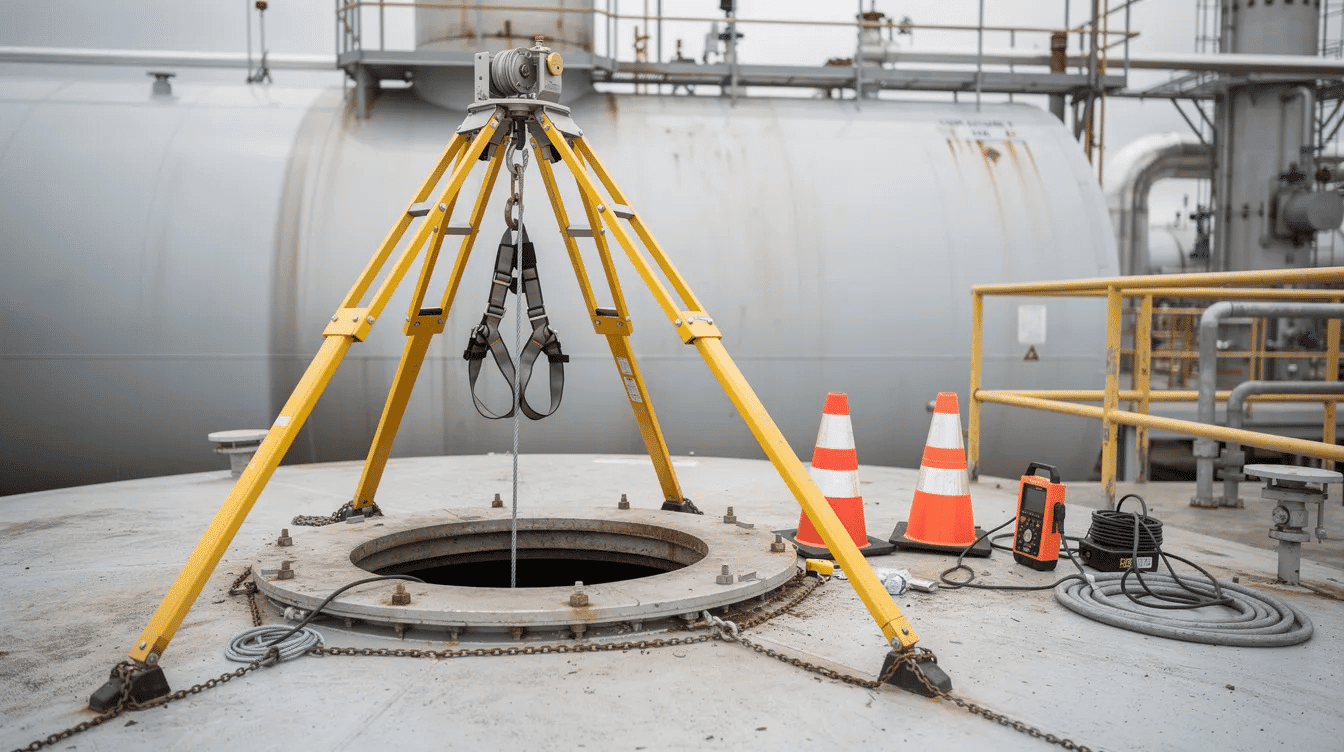
Narrow passageways, converging walls, and sloping floors increase the risk of entrapment and falls. Vertical entries via ladders into manholes and tanks limit rescue options. Use retrieval systems (tripods and winches) and proper anchor points when entering vertical spaces, and wear a harness as applicable.
Confined spaces reach dangerous temperatures from solar heating, steam lines, or hot work—especially in Hawai’i’s warm, humid climate. High humidity and limited airflow make heat stress difficult to detect early.
Controls include scheduling work during cooler hours, forced ventilation with fresh air, hydration breaks, and monitoring for heat-related symptoms.
Many fatal incidents occur in spaces that appeared safe shortly before entry. Process changes, weather events (such as sudden rain that fills storm drains), and work activities can transform conditions unexpectedly. Many atmospheric hazards lack sensory warning signs—no color, no odor, or deceptive odors like hydrogen sulfide —which can cause olfactory fatigue.
The “multiple fatality” pattern is tragically common: a worker collapses, untrained co-workers attempt rescue, and become victims themselves. NIOSH data show that 60% of confined-space fatalities involve would-be rescuers. This is why OSHA and NFPA emphasize pre-planned, trained rescue procedures rather than spontaneous entry.
OSHA 29 CFR 1910.146 (general industry) and 1926 Subpart AA (construction) establish minimum requirements for confined space work across all U.S. states, including Hawai’i through HI-OSHA.
Employer duties include:
On multi-employer construction sites, host employers, controlling contractors, and entry employers must coordinate to avoid conflicting activities. Recordkeeping obligations require training documentation, retention of permits for at least 1 year, and periodic program reviews following incidents.
OSHA defines specific roles for permit-required entries, each requiring dedicated training:
| Role | Key Responsibilities |
|---|---|
| Authorized entrants | Follow procedures, maintain communication, wear required PPE, exit immediately when hazards are suspected |
| Attendant | Remain outside, maintain entrant count, monitor conditions, prevent unauthorized entry, never abandon post |
| Entry Supervisor | Verify testing, confirm isolation and lockout, authorize entry, cancel permits if conditions change |
| Rescue Team | Trained, equipped, capable of responding to specific space types; practice drills annually |
The foundation of safe confined space work lies in using the right equipment and tools to control hazards and protect workers. Personal protective equipment (PPE) such as hard hats, gloves, and respirators is essential for basic protection, but confined spaces often demand more specialized gear. For example, a self-contained breathing apparatus (SCBA) is required when atmospheric monitoring detects oxygen deficiency or toxic contaminants that could threaten life or health. Fall protection harnesses and lifelines are critical for vertical entries, while retrieval systems—such as tripods and winches—enable quick, non-entry rescue in the event of an incident.
Rescue equipment must always be readily available and in good working order, as confined space incidents can escalate rapidly. Atmospheric monitoring devices, including multi-gas detectors, are indispensable for identifying potential hazards such as explosive atmospheres, oxygen deficiency, and toxic gases before and during entry. Regular inspection, calibration, and maintenance of all safety equipment are vital to ensure reliability when it matters most. By equipping teams with the right tools and ensuring they are properly maintained, contractors can significantly reduce the risks associated with confined space entry and create a safer work environment for everyone involved.
Safe confined space entry follows step-by-step procedures aligned with OSHA standards and written programs. ABC Hawaii safety courses walk members through these using local case studies.
Pre-Entry Hazard Assessment: Review drawings, P&IDs, maintenance logs, and Safety Data Sheets. Determine if the space is permit-required and what controls are necessary.
Atmospheric Testing: Test oxygen first, then flammables (%LEL), then toxic gases at all levels (top, middle, bottom). Continuous monitoring throughout entry is essential.
Ventilation: Use mechanical ventilation with intrinsically safe blowers. Never use oxygen—only fresh air. Ventilation must continue throughout work.
Isolation and Lockout/Tagout: Blank and blind lines; double-block-and-bleed valves; verify zero energy before employees working inside can enter.
Communication: Maintain two-way contact between attendants and entrants using radios or agreed signals. Coordinate with other trades in multi-employer settings.
PPE: Select based on hazard assessment—harnesses with retrieval lines, respiratory protection (SCBA for IDLH conditions), and standard protective equipment. PPE supplements, not replaces, engineering controls.
Rescue Readiness: Ensure rescue teams are available and capable. Prefer non-entry rescue using retrieval systems. Conduct annual practice drills. Never rely on untrained co-worker rescues.
Safe confined-space practices directly impact productivity, legal compliance, and worker protection. Prevention is always more cost-effective than emergency response.
A written confined space program must include hazard identification, entry procedures, permit systems, training, and rescue planning. Training covers definitions, hazard recognition, gas monitors, lockout/tagout, and role-specific duties.
ABC Hawaii offers OSHA-aligned confined space and broader occupational safety courses for carpenters, electricians, plumbers, roofers, and general contractors—including online courses and hands-on instruction through its Hawaii Craft Training & Apprenticeship program. Ongoing refreshers, jobsite drills, and post-incident reviews continuously improve practices for many employers across the islands.
Oxygen deficiency stands out as the leading cause of accidents and fatalities in confined spaces. Many confined space incidents occur when oxygen is displaced by other gases—such as hydrogen sulfide in sewer work or manure pits, or carbon dioxide from decomposing organic matter—creating an atmosphere that can quickly become deadly. Without adequate ventilation and continuous atmospheric testing, workers may unknowingly enter oxygen-deficient environments, putting themselves at immediate risk of asphyxiation.
Other significant hazards include toxic-atmosphere exposure to gases such as hydrogen sulfide and carbon monoxide, electrical hazards from exposed wires or malfunctioning equipment, and physical dangers such as loose materials that can cause engulfment. Proper training is essential to help workers recognize these risks, understand the importance of atmospheric testing, and use appropriate PPE. Identifying potential hazards before entry—such as toxic gases or unstable materials—can prevent many confined-space incidents. Ultimately, a proactive approach to hazard recognition, ventilation, and training is the most effective way to protect workers from the leading causes of confined space accidents.
ABC Hawaii is a nonprofit trade association dedicated to improving safety and performance for merit-shop contractors in Hawai’i. Apprenticeship and craft training programs integrate confined-space awareness for trades that regularly encounter these workplace hazards.
Safety and OSHA training offerings address confined space entry, hazard assessment, atmospheric monitoring, and rescue coordination. ABC Hawaii also helps members understand federal regulations and state requirements, providing updates when enforcement policies change.
Contractors and safety managers seeking customized onsite training or program development can contact ABC Hawaii directly for assistance.
The future of confined space safety is being shaped by rapid advancements in technology, training, and regulatory standards. Innovations in atmospheric monitoring—such as wireless, real-time gas detection systems—promise to provide even greater protection by alerting workers and supervisors to hazardous conditions as soon as they arise. Improvements in rescue equipment, including more efficient retrieval systems and advanced communication tools, will further enhance occupational safety during confined space entry.
Training is also evolving, with virtual and augmented reality platforms offering immersive simulations that prepare workers for high-risk scenarios and potential hazards without exposing them to actual danger. On the engineering front, there is a growing emphasis on designing spaces with safer entry and exit points and on integrating ventilation systems that can rapidly remove hazardous atmospheres. Regulatory bodies like OSHA are expected to continue updating standards to reflect these technological and procedural advances, ensuring that confined space incidents become less frequent and less severe. By staying informed about these developments and investing in ongoing training, contractors and safety leaders can lead the way in creating safer, more compliant workplaces for all employees working in confined spaces.
Confined-space hazards—especially atmospheric and engulfment risks—can prove fatal within minutes without clear warning. The potential hazards demand respect, planning, and prepared teams who can work safely under normal conditions and respond effectively when things change.
OSHA’s permit-required confined space standards, combined with rigorous training, planning, and monitoring, are essential to preventing high-risk incidents. Review your current programs, close any gaps, and engage with ABC Hawaii for ongoing support.
Safe confined space work is achievable when hazards are respected, controls are implemented, and teams are fully prepared.
Not every manhole or tank is automatically permit-required. Each must be evaluated against OSHA criteria for hazardous atmospheres, engulfment potential, configuration risks, and other hazards. If any of these exist—or can reasonably develop—the space must be treated as permit-required confined until hazards are eliminated or controlled. Re-evaluate “non-permit” spaces whenever processes or conditions change.
Testing must occur before each entry and whenever work pauses or conditions change. In dynamic environments such as sewers or hot-work spaces, continuous monitoring is strongly recommended. Employers should establish site-specific testing intervals in their written program based on risk level.
Ventilation is a key control, but doesn’t automatically make a space safe. Effectiveness must be verified with gas monitoring before and during entry. Some hazards—like IDLH atmospheres or unstable materials—may require additional controls or prevent entry even with high airflow. Remember: using oxygen for ventilation is prohibited.
Whenever permit-required confined space entry is conducted, the employer must ensure a rescue service is available and capable of responding promptly. Depending on the space and hazards, this may mean an in-house trained team, an external industrial rescue service, or a fire department with confirmed capabilities. Planning cannot rely on calling 911 without prior coordination.
Workers most likely to encounter these hazards include utility workers servicing manholes and utility vaults, plumbers and pipefitters in pits and tanks, electricians accessing crawl spaces, painters working inside tanks with limited access, and maintenance crews in hotel mechanical rooms. Supervisors and attendants also require role-specific training. ABC Hawaii’s programs serve both new entrants and experienced workers needing refresher instruction.