The construction industry is experiencing a profound transformation driven by technologies that promise greater efficiency, fewer errors, and stronger safety outcomes. For Hawaiʻi merit shop contractors, adopting the right digital tools isn’t optional—it’s how you protect margins against the realities of ocean freight, dispersed construction sites, and every costly mistake that hits harder on an island. This guide covers the most impactful construction technologies for Hawaiʻi merit shop contractors, focusing on practical solutions for island-specific challenges. We will explore technologies such as enterprise resource planning (ERP) and job-cost systems, drone programs, building information modeling (BIM), including 4D/5D and digital twins, modular construction, 3D printing, self-healing concrete, generative design, artificial intelligence, autonomous equipment, and more. The intended audience is Hawaiʻi merit shop contractors seeking actionable strategies to overcome the unique logistical, cost, and workforce challenges of building in the islands.

According to CBIZ and the National Center for the Middle Market, 31% of construction-industry respondents named “increasing efficiency” as their top strategic priority—higher than any other industry surveyed. Yet only 26% listed “investing in technology” as their top priority. Many construction companies still rely on traditional methods—manual oversight, spreadsheets, phone calls—to chase productivity levels that technology could deliver faster.
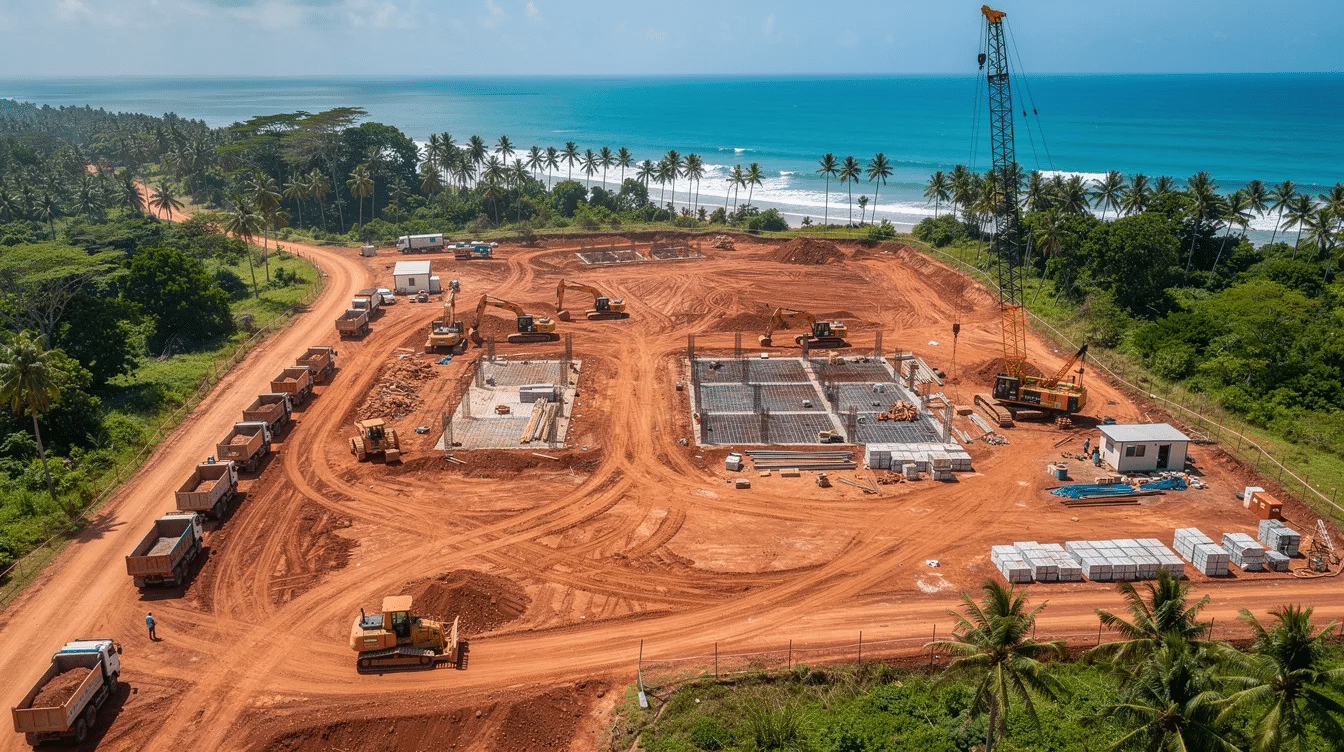
In the Hawaiʻi construction industry, that gap is especially punishing. Long ocean freight lead times mean building materials ordered from the mainland take weeks, not days, to arrive. Limited local inventory, elevated shipping costs, and dispersed construction sites across Oʻahu, Maui, Kauaʻi, and Hawaiʻi Island compound the impact of every scheduling error. A single misorder on a neighbor-island jobsite can trigger emergency air freight costing tens of thousands of dollars and weeks of project delays, while a mainland contractor might re-source regionally in 48 hours.
The thesis is straightforward: Hawaiʻi merit shop contractors don’t need every shiny tool on the market. They need a focused set of well-governed technology tools that reduce waste, avoid wasted mobilizations, improve worker safety, and improve planning, coordination, and execution across island jobs throughout the construction process. ABC Hawaii is seeing member contractors increasingly move from disconnected apps toward integrated platforms that tie project management, field reporting, and financials together—and the construction industry outlook for 2026 reinforces why that shift matters now.
Rather than a generic “top 20” list, this guide focuses on the construction technology priorities that pay off hardest under Hawaiʻi’s constraints. The core categories are:
While other innovations are worth watching—such as augmented reality (AR), which overlays digital information on physical construction sites for better project visualization; wearable technology and IoT sensors, which are growth areas—Hawaiʻi contractors typically see the fastest near-term payback from fixing data flows and coordination first. Bio-based materials and low-carbon elements are increasingly adopted in modern construction, and sustainable construction practices cut waste and improve energy efficiency, but those benefits multiply only when core digital tools are reliable. ABC Hawaii helps members evaluate, train for, and safely integrate new construction technology into real projects and apprenticeship training—not sell specific software.
An ERP built for the construction sector is a single source of truth that ties together estimating, procurement, inventory, payroll, equipment management, and project financials across all jobsites. For Hawaiʻi contractors running concurrent construction projects on multiple islands, integrated ERP and job-cost systems help reduce costs by preventing duplicate orders, invoice exceptions, and freight-related waste.
Capabilities merit shop firms should prioritize include:
ERP ROI research from SysGenPro shows that tighter procurement workflows reduce material leakage, fewer invoice exceptions, and faster reporting cycles.
Consider a scenario in which an Oʻahu-based contractor has active projects on Maui and Hawaiʻi Island. Without ERP, a superintendent may order specialty finish materials, not knowing a container with those exact items is already staged on Maui. The duplicate order triggers extra freight, storage, and wasted labor costs. A properly configured ERP flags the existing commitment instantly, saving time and helping construction managers cut costs. IoT sensors that gather real-time data on structural integrity and temperature on construction sites can feed into these same systems, adding sensor data that supports informed decisions.
ERP systems are only as good as the data they receive. Bad data produces misleading dashboards and wrong forecasts—amplified by island logistics, where a single wrong signal can idle a crew for a week.
Key building blocks include:
Start pragmatically: clean up the top 20–30 most-used cost codes and materials, document standards in a simple playbook, and establish baseline metrics before rollout—average days to process a change order, the percentage of jobs with cost overruns above 5%, and the number of emergency shipments per quarter. Building management systems that ensure energy efficiency in buildings also depend on this same data discipline. ABC Hawaii can weave basic data literacy into craft training so younger construction workers are comfortable with digital timecards and mobile job-cost tools from day one.
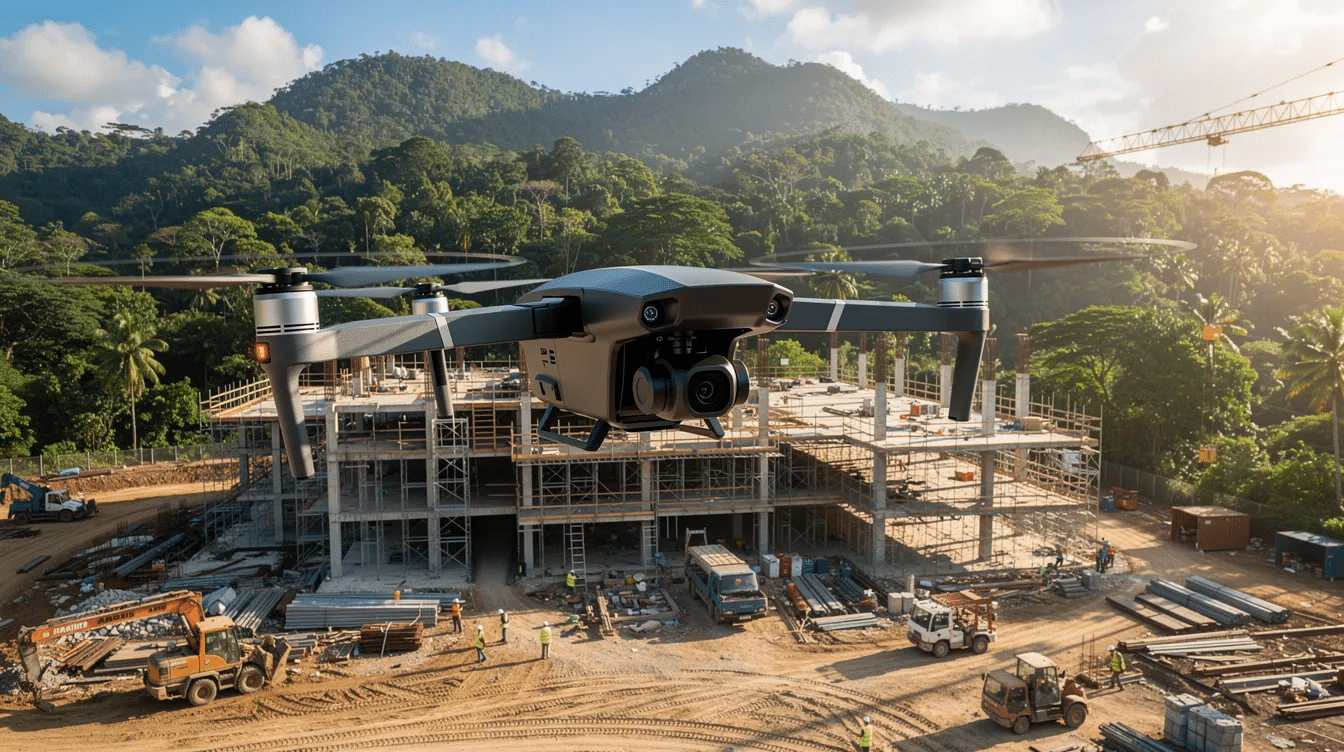
Drones are used for aerial surveying in construction, and the technology has matured well beyond novelty cameras. The drone industry in construction is valued at $10 billion in 2023, reflecting the extent to which project teams now depend on aerial data. Drones capture high-resolution images for project monitoring and provide real-time updates to project managers, reducing the need for costly inter-island flights.
Instead of flying from Honolulu to Kahului every week, teams review orthomosaics and 3D site models captured by trained pilots or local service providers. Drones improve safety by inspecting hard-to-reach areas—coastal retaining walls, steep slopes, rooftops—without the need for scaffolding or rope access. Drones can inspect hard-to-reach areas safely and efficiently. Specific Hawaiʻi use cases include monitoring coastal erosion near oceanfront foundations, documenting remote valley sites, and assessing slope stability where road access is limited.
Compliance requires FAA Part 107 certification, registration, Remote ID, and awareness of military no-fly zones that are especially common across the islands. ABC Hawaii can incorporate drone safety considerations into existing safety training programs.
While drones cannot see underground, aerial mapping combined with survey data, utility records, and terrain modeling significantly improves preconstruction planning. High-resolution topographic data helps identify likely utility corridors, drainage paths, and low spots where subsurface issues are most probable, enabling coordination with ground-penetrating radar specialists before excavation.
On a Hawaiʻi subdivision project, drone-derived terrain data can support better drainage planning, reduce surprises during lava rock excavation, and lower the risk of encountering undocumented utilities. The safety benefits are clear: fewer blind excavations, better pre-task planning, and reduced exposure of crews to unstable slopes. Construction is also integrating renewable energy sources such as solar and wind into designs, and drone surveys help map optimal placement of these systems on complex island terrain.
Building information modeling centralizes project information in a single 3D digital model shared by architects, engineers, and builders throughout a project’s lifecycle, from design to operations. BIM reduces errors and rework in construction projects while enhancing collaboration among designers, contractors, and clients. It improves project planning, budgeting, and resource allocation—all significant areas where Hawaiʻi projects can’t afford surprises.
The evolution from 3D to 4D (adding time and sequencing) and 5D (adding cost) makes information modeling especially powerful for island work. A 4D simulation lets project teams visualize where trades overlap, catching conflicts—HVAC ductwork crossing electrical conduits, for example—before anything is fabricated or shipped across the Pacific. On tight urban Honolulu lots or constrained neighbor-island sites, BIM helps plan staging areas, crane paths, and laydown spaces where mistakes quickly compound. Smaller merit shop contractors don’t need to become full BIM shops overnight but should know how to read models, participate in coordination meetings, and request model access from design teams.
Picture a mid-rise project in Kakaʻako where a critical steel shipment is delayed two weeks. With 4D BIM, the team simulates resequencing activities to keep crews productive rather than idle—a digital twin case study on a Texas mid-rise demonstrated a 43% reduction in labor estimation error and roughly 6% reduction in overtime through this kind of schedule simulation. Digital twins help optimize building operations and maintenance.
5D BIM integrates live cost information, enabling teams to test “what if” scenarios—substituting a locally available material, or changing sequencing to reduce scaffolding rental days—before commitments are locked. BIM-linked quantity takeoffs and procurement plans reduce the risk of under-ordering or over-ordering materials that are expensive to ship and store. For future projects, this means better collaboration between the office and the field from preconstruction through closeout. ABC Hawaii can help members interpret owner and GC BIM requirements and integrate BIM awareness into apprenticeship programs through resources like virtual reality in construction training.
While full-scale 3D-printed buildings remain rare and face regulatory questions in Hawaiʻi, 3D printing and broader additive manufacturing already play practical roles. The global 3D printing for construction market was valued at $3.5 billion in 2022, and 3D printing technology is expected to exceed $523 billion by 2030. 3D printing can significantly reduce building costs, create entire structures in record time, and minimize material waste in construction. 3D printing reduces construction time and material waste in ways that matter on islands where yard space is scarce.
Relevant use cases for Hawaiʻi include printing custom brackets, formwork elements, or specialty fixtures to overcome long mainland lead times and producing mockups for owner approvals. Local universities may offer access to industrial printers for prototyping. Self-healing concrete can automatically seal cracks over time using special additives, and other innovative building materials are also emerging as environmentally friendly options. Electric vehicles that reduce emissions on construction sites complement these sustainable approaches. Don’t over-index on printed houses yet—focus on smaller, high-value parts that solve specific island supply challenges.
Modular construction involves manufacturing structural components in controlled environments. This approach increases efficiency and reduces waste in construction, which is especially valuable in Hawaiʻi where site access and weather can be unpredictable. Modular construction allows for faster on-site assembly, minimizes material loss, and helps contractors better manage logistics and scheduling.
Many Hawaiʻi readers have already seen extensive AI coverage, so this section stays focused. Artificial intelligence works best as a layer on top of existing construction technology—ERP, BIM, project management tools—that helps project managers with specific tasks: forecasting cash flow, analyzing historical job performance, and triaging RFIs and submittals.
Generative design uses AI to optimize designs for budget and energy performance. AI and machine learning optimize scheduling and improve safety in construction, and AI can increase construction industry profits by 71% by 2035. Data leaders in construction are 7x more likely to use AI. BAM Ireland improved on-site quality by 20% using AI tools. AI enhances predictive maintenance and resource allocation in construction, helping project managers make informed decisions in real time. For a practical example, AI embedded in estimating tools can compare current bids against years of past Hawaiʻi projects, catching underpriced scopes before a contract is signed.
For deeper dives, ABC Hawaii offers resources on construction-focused AI platforms and AI training to close the skills gap. Any AI effort depends on clean, well-structured project data—resist buying AI tools until underlying construction workflows are disciplined.
Autonomous equipment can perform grading and earthmoving tasks without human operators. Robots can perform tasks such as bricklaying and welding, increasing precision and reducing human error on construction sites. Automation allows construction work to continue around the clock, and robotics can minimize workplace injuries by handling dangerous tasks. These advanced tools will become relevant as firms streamline operations and increase efficiency by focusing on the basics first.
Data quality is the make-or-break factor for every construction technology discussed above. Bad data produces misleading dashboards and poor decisions amplified by island logistics constraints.
A simple data governance framework for construction professionals includes standardized cost codes, clear ownership of data entry, agreed definitions of KPIs, and routine quality checks. Field crews must be engaged early—foremen and superintendents should help select digital forms and daily report templates so that tools fit the realities of each island’s construction sites.
Wearable technology enhances construction site safety and productivity and generates valuable data. Smart hard hats can include collision sensors for worker safety. Wearable tech can monitor vital signs such as heart rate and temperature, while wearable devices provide real-time data to improve on-site communication. Exosuits can reduce physical strain on construction workers. All of this sensor data is only useful if it feeds into governed systems. Cloud computing and mobile technologies—including mobile devices for field reporting—support this data flow, but training and repetition are essential. Start with a small set of metrics aligned to business goals and review them monthly.
This is a practical roadmap, not theory. Across the construction sector, many construction companies that successfully adopt construction technology follow a staged approach:
Autonomous equipment can perform grading and earthmoving tasks without human operators, and robots can perform tasks such as bricklaying and welding—robotics increases precision and reduces human error. Automation allows construction work to continue around the clock, robotics can minimize workplace injuries on construction sites, and robots help improve workflow and optimize resource management.
Evaluate pilot results honestly, gather feedback from craft workers and supervisors, and only then roll out to additional projects. This approach helps construction firms improve efficiency without disrupting active jobs. Firms embracing merit shop construction practices are well-positioned to move quickly because they already value performance-based decision making.

ABC Hawaii is a nonprofit trade association representing merit shop contractors, suppliers, and related firms across the state. Technology adoption connects directly to core offerings: apprenticeship and craft training, OSHA and construction safety training, management education, and advocacy.
Augmented reality enhances project visualization and problem analysis in construction. AR and VR improve construction site surveys and project visualization, and VR allows immersive project experiences before construction begins. AR and VR enhance training and troubleshooting in construction, and XR technologies enable real-time collaboration in construction projects—all areas ABC Hawaii is integrating into training curricula.
ABC Hawaii helps members understand construction industry trends, integrate digital skills into apprenticeships, and run training on safe drone operations, BIM coordination, and data-driven project management. Networking through industry events lets contractors learn from peers who have piloted these tools. Addressing labor shortages through a tech-ready workforce pipeline positions merit shop firms to execute construction projects with a competitive advantage. Technology complements skilled trades—it amplifies craftsmanship by eliminating repetitive paperwork and preventable errors, saving time and improving efficiency on every project.
Start with digital basics: a reliable field-to-office timekeeping and job-costing tool, simple cloud storage for plans and photos, and basic drone photography through a service provider. These deliver quick wins in labor tracking and documentation, and in reducing inter-island travel. Focus on solving a specific pain—undocumented T&M work, lost photos, delayed timesheets—rather than chasing features. ABC Hawaii can help members evaluate low-cost, construction-focused options and tie them into existing training programs. Roll out on one or two crews first to keep disruption low.
Frame technology in terms of delivered value: fewer delays, better documentation that reduces disputes, and stronger construction safety performance that lowers claims risk. Collect simple before-and-after metrics from pilot projects—reduction in RFIs, days of delay avoided, rework hours saved—and include them in future proposals. In Hawaiʻi’s tight market, a reputation for predictable schedules and clean closeouts wins repeat work even when initial bids aren’t the lowest. Share selective case studies rather than internal dashboards to demonstrate results.
Many Hawaiʻi merit shop contractors successfully use a hybrid model: partnering with BIM consultants, surveyors, or drone service providers for specialized tasks while building modest internal capability to interpret results. Early on, outsourcing heavy modeling or advanced drone mapping is usually more cost-effective. Assign an internal technology champion on the operations side to coordinate with external specialists. Regardless of the sourcing model, project teams must be trained to use outputs—models, maps, and reports—in daily coordination.
Technology is now part of everyday craftwork. Apprentices encounter tablets for plans, digital punch lists, automated layout tools, and BIM-fed shop drawings during their first years. Integrating these skills into apprenticeship programs helps workers stay employable, reduces the learning curve on jobsites, and positions merit shop contractors as attractive employers for tech-savvy young people. Well-trained construction workers who are comfortable with digital tools collect more accurate project data, follow safety protocols in apps, and support successful technology adoption across the company.
For focused pilots—such as job-cost tracking or drone progress capture—tangible benefits often appear within one or two project cycles, roughly 6–18 months, depending on project scope and complexity. Full ERP or comprehensive BIM integration may take 18–36 months to stabilize, but delivers compounding returns through reduced rework, better forecasting, and fewer emergency mobilizations. In Hawaiʻi, even avoiding a single emergency air freight shipment or preventing a week of idle labor can quickly offset initial costs. Set clear ROI expectations from the start and review progress quarterly rather than waiting for perfection.