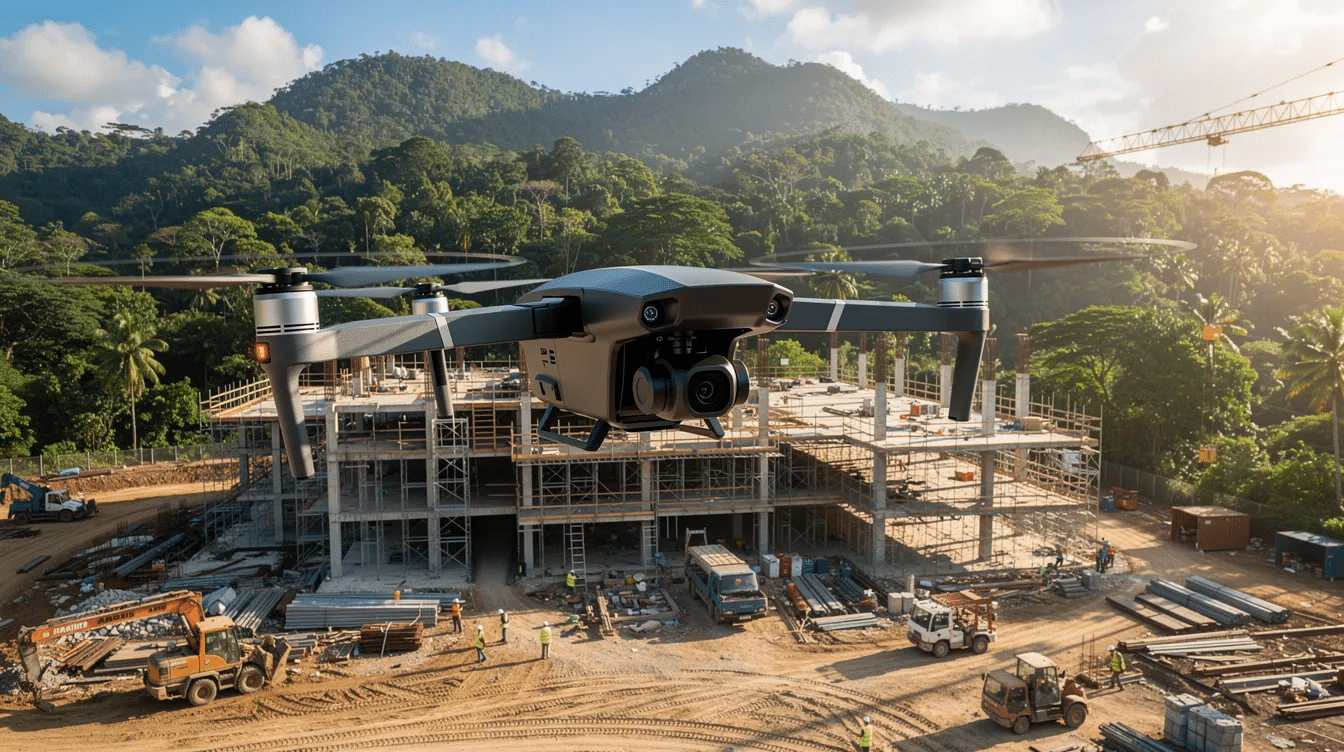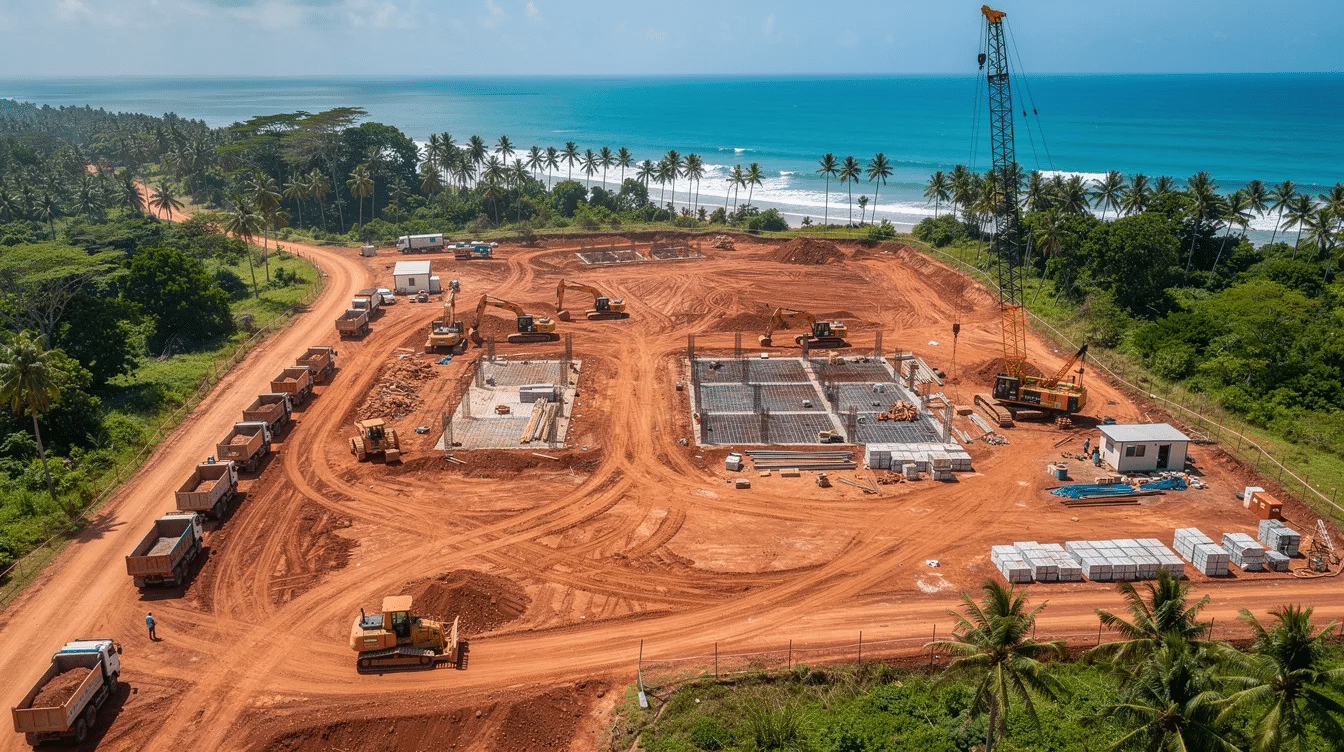
Autonomous construction technology moved from prototype to production floor in 2026. For merit shop contractors in Hawai’i, the question is no longer whether intelligent machines will reshape the jobsite-it is how quickly you position your company to benefit.

CONEXPO-CON/AGG 2026 put autonomous construction equipment at the center stage. AI-enabled excavators, dozers, compactors, and haul trucks ran real demo cycles rather than static displays. Caterpillar introduced AI assistant technology to various construction machines. Komatsu showcased next-generation dozers with intelligent machine control. The message from every major OEM was the same: this hardware is ready to ship.
The capital markets agree. Venture capital investment in construction tech reached approximately $2.6 billion in 2025, a 63 percent year-over-year increase, signaling that autonomy has crossed from fringe research into a funded, scalable market. Meanwhile, the industry needs roughly 349,000 net new workers in 2026 just to hold steady, with that number climbing to about 456,000 in 2027, according to Associated Builders and Contractors.
For ABC Hawaii members, this timing is critical. Hawai’i contractors face sustained demand in defense, infrastructure, tourism-related development, and energy facilities, but cannot recruit fast enough to fill every crew. Persistent workforce gaps, bids that strain current headcount, and tighter schedules on every construction site make advanced technology a competitive necessity rather than a luxury. This guide focuses on how merit shop contractors and field leaders can decide when and how to adopt autonomous solutions in Hawai’i’s market.
Autonomous construction is not brand-new; mining operations in Australia and the American West have run autonomous haul trucks for over a decade. What changed in 2026 was that decades of technological development made it practical to use in mixed-fleet heavy civil and infrastructure work on unstructured construction sites.
Three shifts converged:
Connected platforms and telematics now enable a single supervisor to manage multiple autonomous or semi-autonomous machines via cloud-based dashboards that provide real-time machine health monitoring. Data-led coordination using building information modeling, AI, and analysis optimizes workflows across the entire jobsite. Even emerging capabilities like 3D printing technologies can produce building components or entire structures, showing how construction is borrowing automation methods from manufacturing as well.
Heidelberg Materials moved over two million tons of limestone autonomously at its Lake Bridgeport, Texas, quarry using a mixed-fleet autonomous hauling system integrating both Komatsu and Caterpillar haul trucks under a single Pronto vision-based autonomy platform. That interoperability, different OEM machines, one control system, is a milestone for contractors running mixed fleets.
The results matter for your bottom line: automation allows for continuous operation, increasing efficiency on job sites, with consistent cycle times and fewer unplanned stoppages, translating to predictable production and lower unit cost per ton hauled. Separately, Caterpillar deployed four Cat 777 trucks at Luck Stone’s Bull Run quarry in Virginia, hauling over two million tons in the first year with zero reported safety incidents.
These are not R&D demonstrations. Industry bodies like AEM confirmed at CONEXPO 2026 that many machines on display were marketed for commercial deployment. For Hawai’i, the analogies are clear: autonomous or supervised haul trucks at O’ahu quarries, automated grading for industrial pads, and precise compaction on solar fields or defense projects where schedule certainty is non-negotiable.

The construction industry is experiencing a shift toward hybrid sites with human and smart machine collaboration. Autonomous construction equipment does not eliminate the need for craft professionals-it shifts repetitive tasks from humans to machines while humans move into operation, supervision, and orchestration roles.
New roles look like this: a field leader overseeing a small fleet of autonomous haul trucks, an experienced operator remotely managing multiple dozers from a safe control station, or a superintendent interpreting real-time production data and adjusting workflows on the fly. Automation enables longer careers with less physical toll on workers, and autonomous technology lowers physical barriers to entry into construction careers, opening doors for people comfortable with digital tools, computers, gaming-style controls, and data dashboards, including younger workers, career changers, and veterans.
Many tasks remain difficult to automate: precision electrical work, plumbing, complex finishes, and problem-solving on-site. Autonomy frees skilled craftspeople to focus on high-value work while machines handle repetitive groundwork. ABC’s broader training ecosystem, including programs like the America’s Workforce Academy partnership with Meta, proves that technology-driven demand expands who enters the trades. ABC Hawaii serves as the local hub for similar upskilling around autonomous technologies, helping prepare workers for the future.
Autonomous construction technology gives contractors a way to do more work with the workforce they have. The economic levers are direct:
| Lever | Impact |
|---|---|
| Schedule compression | Consistent operation and optimized cycle times reduce project duration |
| Extended hours | Supervised autonomy in low-light or off-peak periods adds productive shifts |
| Reduced downtime | Predictive maintenance and automated safety checks keep machines running |
| Fewer errors | Automated systems improve quality by minimizing errors in construction tasks, cutting remediation |
| Safety | Autonomous machinery enhances worker safety by performing dangerous tasks-robots and drones take on hazardous work, keeping workers safe |
Construction automation can lead to faster project completion and reduced costs. Autonomous technology can reduce the demand for labor in construction by improving productivity per machine hour, thereby helping contractors serve more customers without expanding headcount at the same pace. For ABC Hawaii members bidding on large projects-mass earthwork, logistics hubs, military infrastructure-this means increasing reliable daily production without needing to immediately hire dozens of operators the market cannot supply.
The financial case sharpens over time: autonomy lowers unit cost per yard moved, reduces fuel waste through optimized routing and idle reduction, and stabilizes production in Hawai’i’s variable weather. Remote operation keeps people away from steep slopes, confined zones, and night work near traffic with real-time monitoring and automatic shutdown when unsafe conditions arise.
Be honest about what stands between your company and adoption:
The skills profile for autonomous-enabled jobsites blends craft knowledge with digital literacy: understanding grading and material handling fundamentals, reading real-time dashboards, and troubleshooting both mechanical and software systems.
The most effective approach uses modular, stackable learning pathways-short, competency-based modules building from basic equipment operation to teleoperation to autonomous system supervision-aligned with frameworks recognized by NCCER. Simulation-based training and VR tools allow apprentices to practice supervising autonomous excavators and compactors in a safe environment before operating live machines.
ABC Hawaii can integrate autonomy content into existing apprenticeship programs in carpentry, electrical, plumbing, and other trades, teaching students to coordinate their work with autonomous equipment. Contractors should also intentionally capture institutional knowledge from senior operators, grading instincts, and an understanding of local soils and weather by establishing mentorship roles in which veterans coach the next generation. Additional AI-focused training resources are already available through the chapter.
Hawai’i’s project mix is well-suited to early adoption:
Autonomous construction technology is a practical option today, not a distant concept. The construction industry is transforming and redefining what constitutes a capable crew. Merit shop contractors who learn to integrate these tools will be better positioned for large, complex, schedule-driven work across all of Hawai’i’s markets.
Autonomy helps close the workforce gap by augmenting crews, broadening who can succeed in construction careers, and giving experienced operators a path into high-value supervisory roles. Start building a relationship with autonomous-capable equipment now, select a pilot project, and train your people through ABC Hawaii’s apprenticeship and craft training programs.
Capture institutional knowledge from your veteran operators today. Their expertise becomes the foundation of a sustainable, tech-enabled workforce for Hawai’i tomorrow.
The contractors who engage early with autonomous construction equipment will hold a lasting advantage in bidding, delivering, and staffing the next decade of Hawai’i construction projects.
Yes. While initial deployments targeted large earthmoving and quarry operations, retrofit autonomy platforms and scalable subscription models are making autonomy accessible to mid-sized businesses. Partnering with OEM dealers and trade associations like ABC Hawaii for training and support further reduces barriers.
Apprentices still need core craft skills, but their training increasingly includes digital tools, simulation, and coordination with autonomous machines. This creates a faster path from entry-level work to higher-responsibility, better-paid operator and supervisor roles with less physical grinding.
Most current systems require reliable GPS coverage plus a local wireless network-LTE, private 5G, or mesh Wi-Fi-across the site. Contractors should plan connectivity into site logistics alongside power and laydown areas, especially given Hawai’i’s terrain variability.
Liability shifts but does not necessarily increase. Contractors must update safety plans, operator training documentation, and coordination with insurers. In many cases, autonomy reduces incidents and claims by removing people from high-risk tasks, provided companies follow OEM guidance and regulatory requirements.
ABC Hawaii can convene member roundtables, connect contractors with OEMs and technology partners, incorporate autonomy-related content into local training and apprenticeship programs, and help leaders design stackable learning pathways and mentorship structures tailored to Hawai’i’s workforce needs.