

Hawaii’s construction industry needs licensed electricians—now and for the foreseeable future. ABC Hawaii’s electrical apprenticeship offers a state-approved, debt-free pathway into this high-demand trade.
The 2023 Maui wildfires destroyed over 2,200 structures in Lahaina alone, generating an estimated 10,000+ electrician work-hours annually for residential and commercial reconstruction through 2030. Federal projects at NAVFAC Hawaii and the Pearl Harbor Naval Shipyard add $2-3 billion in annual contracts that require industrial electrical workers.
Hawaii’s housing crisis compounds this demand. With Oahu’s median home price exceeding $1.1 million and a 40,000-unit shortage, new multifamily development and renewable energy tie-ins require licensed electricians statewide. Geographic isolation means the state cannot import enough journeymen from the mainland—local apprenticeship training is essential for workforce development.
In a state where the cost of living is 85% above the national average and median rents hit $2,500/month, four-year college debt creates serious financial strain. University of Hawaii graduates often carry $40,000-$60,000 in student loans while starting at $45,000-$55,000 salaries that barely cover expenses.
Apprenticeships invert this equation. ABC Hawaii entrants earn $18-$25/hour immediately and accrue $100,000+ in wages over four years without tuition bills. The electrical trade offers portable, license-based employment with clear wage progression and overtime opportunities across residential, commercial, and industrial projects. This pathway suits high school graduates, veterans, career changers, and underemployed workers seeking stable careers without crushing debt.
ABC Hawaii’s electrical apprenticeship program is state-approved and registered with the U.S. Department of Labor, recognized by the Hawaii Department of Labor and Industrial Relations. Apprenticeship programs in Hawaii often involve a combination of on-the-job training and classroom instruction, taking approximately 3 to 5 years to complete depending on the trade—this program typically runs four years with 8,000 OJT hours plus 576-700 classroom instruction hours.
Apprentices work full-time for ABC member contractors across all major islands while attending evening classes at ABC Hawaii’s Honolulu facility. The curriculum covers safety, electrical theory, NEC code, residential wiring, commercial systems, and troubleshooting. Apprentices have specific responsibilities, including completing all required coursework, passing periodic tests, and adhering to program, legal, and safety regulations throughout their training. This is a merit-shop program in which students advance based on skills and performance, not on union classification.
ABC Hawaii apprentices are employees from day one, earning starting pay at 40-50% of journeyman wages—typically $18-$25/hour. Graduates of apprenticeship programs often experience career advancement, with specified hours, certifications, and pay progression outlined during their training.
Pay increases every 1,000-2,000 hours of job training completed. Benefits may include health coverage, depending on the employer. By year four, apprentices can earn $40/hour or more—while a college student accumulates debt, an ABC apprentice builds experience, income, and qualifications for licensure.
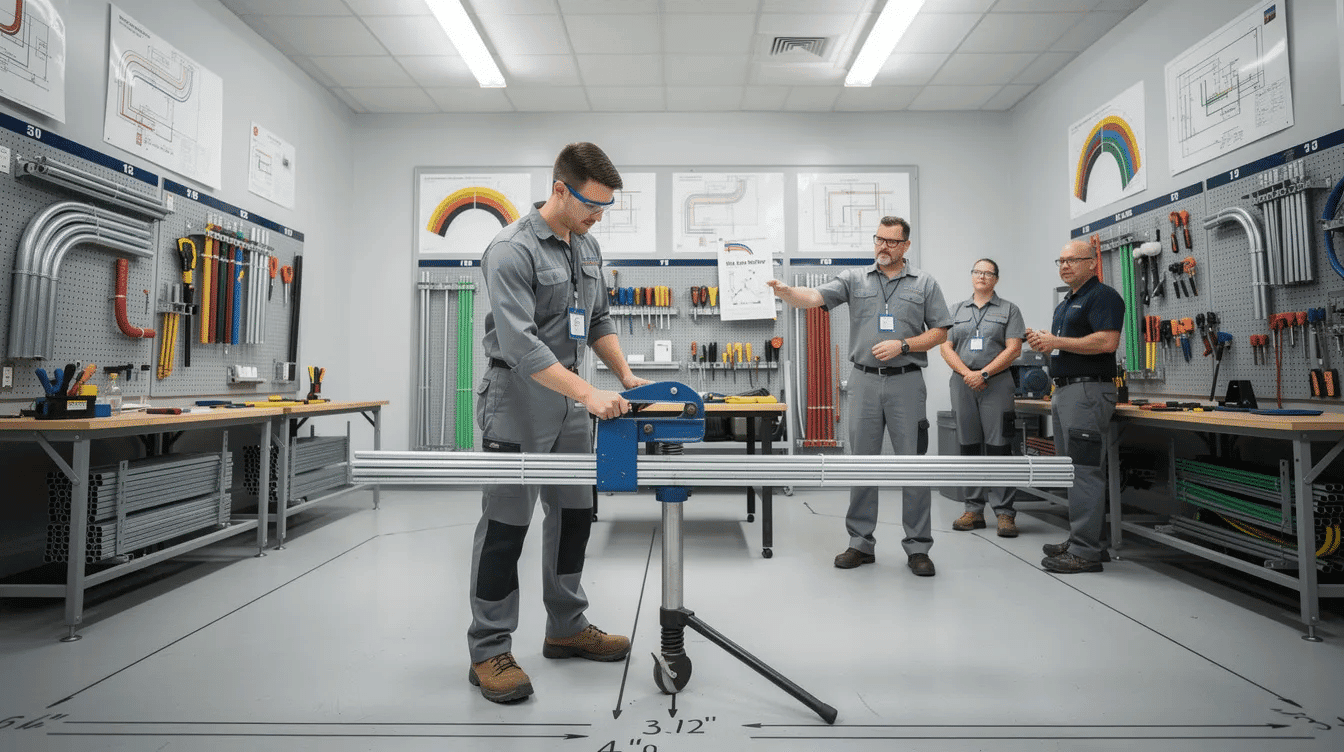
Learning happens in two integrated settings coordinated by ABC Hawaii. Training programs for apprentices in Hawaii often include structured lessons covering industry-relevant techniques and safety practices, ensuring apprentices are well prepared for their roles in the workforce. Apprentices are required to perform hands-on tasks and assessments to demonstrate their readiness and skills throughout the program.
On-site training includes:
Classroom instruction covers:
Instruction is delivered by experienced electricians with current field experience in Hawaii under proper supervision.
Electrical apprenticeship programs typically require applicants to be at least 18 years old and to provide documentation such as a high school diploma or GED. Eligibility for the Inside Wireperson Apprenticeship Program is determined based on meeting minimum qualifications and standards, including providing a copy of a high school diploma or GED and transcripts showing completion of one year of high school algebra or a recognized equivalent. ABC Hawaii has similar requirements, since electrical calculations rely heavily on mathematical skills.
Applicants for apprenticeship programs must pass the required aptitude and color vision tests, especially for certain programs such as those offered by Associated Builders and Contractors Hawaii. Prior construction experience is helpful but not required—the program trains motivated beginners. Candidates must handle physical demands, including ladder work and lifting 50 lb, with reasonable accommodations available. The program is committed to providing equal opportunity without discrimination based on race, color, religion, national origin, sex, age, physical handicap, marital status, or arrest record.
To apply for an apprenticeship in Hawaii, candidates must be at least 18 years old and provide documentation to verify their age, such as a birth certificate or state ID. Applications are processed through ABC Hawaii’s Education and Apprenticeship office at 99-840 Ualena Street, Aiea, HI 96701.
Application process:
Applicants must carefully follow all instructions provided during the application process, including completing online forms, submitting required documentation, and preparing for aptitude tests to ensure a successful submission.
Applications for the City of Honolulu’s Trades Apprentice I position are accepted only online when recruitment is open, and candidates must check the Permanent Jobs page for availability—application deadlines and openings are posted there. Applicants are responsible for monitoring these postings and checking the website regularly for updates. ABC Hawaii similarly has cohorts starting in the fall and spring with limited seats. Contact (808) 456-7730 or education@abchawaii.org for upcoming dates. Selected applicants are placed with member contractors and formally registered with the Department of Labor and Industrial Relations.
Completing an apprenticeship program enables individuals to graduate as skilled tradespeople, securing permanent positions in their fields. After completion of required hours and coursework, graduates receive a certificate that qualifies them to sit for Hawaii’s journeyman electrician licensing exam.
Upon completion of an apprenticeship program, graduates can apply their work process and related instruction hours towards an Associate degree, enhancing their qualifications and career prospects in the construction industry. Post-journeyman paths include lead electrician, foreman, estimator, or contractor owner. Licensed electricians in Hawaii average $48/hour with steady employment across military, housing, and renewable projects.
ABC Hawaii offers Electrical 240 for licensed electricians seeking expertise in higher-voltage and complex systems. This advanced certification covers medium-voltage distribution (up to 35kV), SCADA controls, and arc flash safety—positioning graduates for supervisory roles and premium wages of $50-$70/hour in federal and industrial construction.
ABC Hawaii operates five DOL-registered apprenticeships: Electrical, Carpentry, Plumbing, Painting, and Roofing through its broader Hawaii Craft Training & Apprenticeship program. Some apprenticeship programs may require or offer pre-apprenticeship courses for prospective candidates—ABC Hawaii’s Trade School provides 40-80 hour introductions for those exploring construction before committing.
Through the SkillsUSA partnership, Hawaii high school students can pipeline directly into ABC apprenticeships. The National Craft Championships offer apprentices opportunities to compete nationally, thereby building their resumes and earning industry recognition. Honolulu Community College offers a program in Electrical Installation and Maintenance Technology, which prepares students for the State of Hawaii Maintenance Electrician license—complementing but distinct from ABC Hawaii’s journeyman pathway. For more detailed information on program requirements or class specifications, refer to the official program charts or resources provided by each institution.
Training programs in Hawaii include union-affiliated options and non-union (merit shop) pathways for apprenticeships. ABC Hawaii’s merit-shop philosophy emphasizes advancement based on individual performance while complying fully with Davis-Bacon and prevailing wage requirements. Apprenticeships typically combine on-the-job training and classroom instruction, allowing apprentices to gain practical experience while learning theoretical concepts.
Safety training, including OSHA 10/30 and NFPA 70E arc flash awareness, is integrated throughout. Networking with 500+ member contractors and industry advocacy provides apprentices with structured support and clear standards.
If you enjoy hands-on problem-solving, want to stay in Hawaii, and prefer earning to borrowing, this program is for you. The Hawaii Electrical Training Alliance is regarded as a premier training program that combines classroom study with on-the-job training. ABC Hawaii provides a comparable merit-shop alternative.
Take action: Contact ABC Hawaii at (808) 456-7730, visit the Ualena Street office, or apply for the next electrical apprenticeship cohort. The Inside Wireperson Apprenticeship Program in Hawaii is currently closed for recruitment on Oahu, but is available on Kauai, Maui, and the Big Island—ABC Hawaii now offers statewide placement.
The program typically runs four years, combining 8,000 on-the-job training hours with approximately 576-700 hours of classroom instruction. Duration varies slightly based on work consistency and coursework completion. All hours must be documented to meet U.S. Department of Labor and Hawaii DLIR standards.
Yes. ABC Hawaii places apprentices with member contractors on all major islands. Classes may be delivered through hybrid or distance formats coordinated from the Honolulu office. Contact ABC Hawaii to discuss island-specific openings.
Apprentices need basic hand tools (~$500, list provided). Instruction costs are covered by employers and ABC Hawaii; minor fees for books and PPE (~$200/year) may apply. Wages offset these costs—no student loan debt required.
Apprentices must be eligible for employment in the United States. Some federal and military projects at NAVFAC Hawaii or Pearl Harbor Naval Shipyard require U.S. citizenship for site access. Discuss specific situations with ABC Hawaii staff confidentially.
Try ABC Hawaii’s Trade School or attend an information session. You can also explore Carpentry, Plumbing, Painting, or Roofing apprenticeships. Research your options with current apprentices before committing to determine the best fit for your future.