


Hawaii’s construction pipeline has never been larger—or more contested. With billions flowing into Maui wildfire rebuilding, federal infrastructure upgrades, military modernization, and state housing initiatives, the question of who gets to bid on publicly funded construction projects is no longer academic. It’s existential for merit shop firms across the Islands.
At the center of this fight is the project labor agreement. If you’re a contractor, executive, or government affairs professional working in Hawaii’s merit shop community, understanding PLAs—and knowing how to push back against mandates—is critical for protecting your access to public work in 2026 and beyond. Government-mandated PLAs often apply to taxpayer-funded construction projects, affecting who can participate and how public resources are allocated.
Who gets to bid on these projects isn’t just a matter for contractors; it directly affects construction users, including local workers, women, minorities, and veterans who rely on fair access to jobs and opportunities within the construction industry.
For merit shop firms, PLA mandates can mean exclusion from opportunities, and minority contractors and small businesses can also be disadvantaged by these requirements, limiting diversity and competition in Hawaii’s construction sector.
A project labor agreement is a pre-hire collective bargaining agreement that sets wages, benefits, hiring procedures, and work rules on a specific construction project before bidding begins. These agreements typically require all contractors and subcontractors to use union labor, pay union wages and fringe benefits, and follow union work rules—regardless of a contractor’s existing workforce structure. ABC Hawaii opposes government-mandated PLAs because they effectively shut out the vast majority of Hawaii’s construction workforce and limit competitive bidding. Non-union contractors and non-union workers are often excluded from PLA projects due to union-only requirements, which restrict their participation and create barriers for merit shop firms.
In 2026, PLAs are especially urgent in Hawaii. The Maui wildfire rebuilding pipeline, Bipartisan Infrastructure Law funding, major NAVFAC Hawaii and Pearl Harbor Naval Shipyard projects, and state-backed housing initiatives represent billions of public dollars where PLA mandates can determine who can realistically bid—and who gets locked out.
About 69% of Hawaii’s private-sector construction workers are nonunion, according to U.S. Bureau of Labor Statistics and Hawaii Department of Labor and Industrial Relations data. PLA mandates risk, sidelining the majority of local tradespeople and many ABC Hawaii members who have invested heavily in their own apprenticeship and training programs. Under the National Labor Relations Act, pre-hire agreements like PLAs are generally prohibited except in specific circumstances, which is why their use remains controversial and subject to ongoing legal and policy debates.
Studies have shown that government-mandated PLAs can increase construction costs by 12% to 20% compared to similar projects not subject to such agreements, primarily due to reduced competition among bidders. In a high-cost state already struggling with housing affordability, this is a burden taxpayers cannot afford.
This article provides a practical action plan for Hawaii merit shop contractors, including how to use ABC Hawaii’s Government Affairs Committee, ABC Action App, and Free Enterprise Alliance to engage on PLA policy fights in 2026.
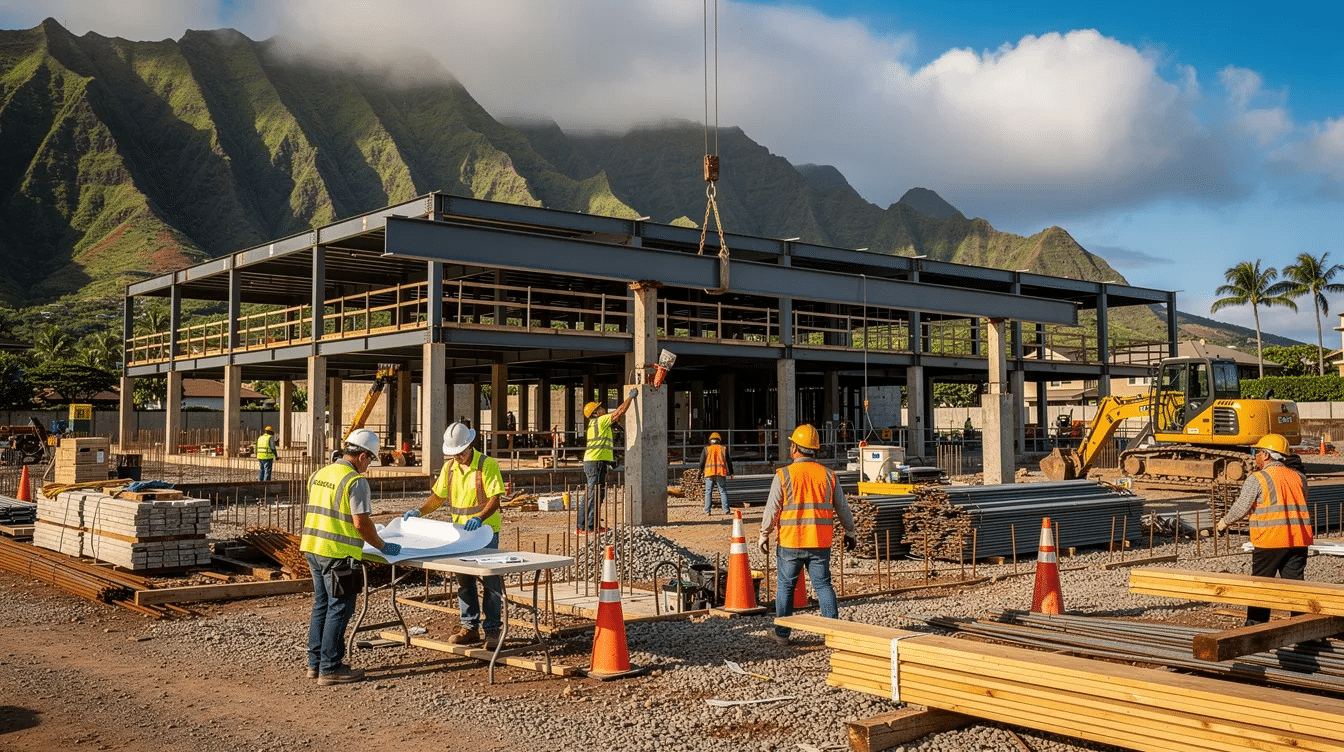
A project labor agreement is a pre-hire collective bargaining agreement negotiated for a particular project before any contractors are hired or bids are awarded. These pre-hire agreements establish the terms and conditions of employment for all construction workers, setting wages, benefits, hiring procedures, and work rules in advance. PLAs are often imposed on publicly funded projects by government entities, especially at the federal, state, or local level.
Project Labor Agreements typically require all contractors and subcontractors on a project to:
PLAs typically include clauses that prohibit strikes, lockouts, or other work stoppages, ensuring that labor disputes don’t halt progress (Fact: 1, 2). This is known as a strike ban, which means that both unions and employers agree not to engage in strikes, picketing, or lockouts for the duration of the project, often enforced through expedited arbitration.
Dispute resolution procedures in PLAs set forth mutually binding, prompt mechanisms for resolving labor disputes and grievances without disrupting construction (Fact: 5). These procedures are designed to quickly address and settle disagreements, ensuring that work continues smoothly.
Many PLAs include specific local hiring goals for hiring local residents, veterans, and individuals from underrepresented or disadvantaged backgrounds (Fact: 3, 4). These goals are intended to promote workforce diversity and provide opportunities for community members, often by setting targets for the percentage of local or disadvantaged workers employed on the project.
Government agencies may impose project labor agreements as a condition for bidding on these publicly funded projects. These requirements apply regardless of whether a contractor normally operates as a union or nonunion firm.
There’s a critical distinction between:
For many nonunion contractors, signing such an agreement creates significant operational burdens:
These burdens explain why research indicates that the use of PLAs can reduce the number of bidders for construction projects, as nonunion contractors may be discouraged from participating due to the requirements they impose.
Hawaii’s public construction projects are scaling up dramatically in 2026, and PLA mandates could determine which contractors can compete for this work.
The August 2023 Lahaina and Upcountry Maui wildfires destroyed over 2,200 structures, killed more than 102 people, and triggered a $4 billion-plus rebuilding pipeline stretching through 2030. This includes:
County officials and some labor organizations have proposed PLAs as a “stability” tool for this work. For merit shop contractors who built Maui before the fires, these mandates could lock them out of rebuilding their own communities.
Billions in federal infrastructure dollars are flowing to Hawaii through the Bipartisan Infrastructure Law (2021). The federal government plays a key role in setting project labor agreement (PLA) policy for federally funded construction projects, including through executive orders and regulations that can mandate or prohibit their use. Hawaii’s allocation includes:
| Category | Estimated Funding |
|---|---|
| Roads/Bridges | $1.2 billion |
| Airports | $150 million |
| Broadband | $240 million |
| Resilience/Climate | Varies |
| Federal-aid highway projects and other federally funded construction projects represent significant opportunities—and potential PLA exposure—depending on how federal agencies and state partners structure their procurements. |
NAVFAC Hawaii and Pearl Harbor Naval Shipyard oversee more than $2 billion annually in construction and modernization, including:
Many of these direct federal projects exceed $35 million, placing them squarely within the window of Executive Order 14063’s PLA mandate.
Hawaii Housing Finance and Development Corporation (HHFDC) and Hawaii Community Development Authority (HCDA) are pushing for 10,000+ housing units through state capital improvement budgets totaling more than $1 billion in 2025-2027. Affordable housing projects, school construction, and transportation upgrades increasingly include PLA language in RFPs or enabling legislation.
In a state with chronic labor shortages and 3% unemployment in construction, constraining bidder pools via PLAs is especially risky for project timelines and total cost.

Understanding how PLAs appear in bid documents and in daily operations is essential for anyone navigating Hawaii’s public procurement landscape.
Project Labor Agreements typically include:
PLAs typically include clauses that prohibit strikes, lockouts, or other work stoppages, ensuring that labor disputes don’t halt progress (Fact: 1, 2). This strike ban is a key feature, preventing disruptions and enforced through expedited arbitration.
Dispute resolution procedures in PLAs set forth mutually binding, prompt mechanisms for resolving labor disputes and grievances without disrupting construction (Fact: 5). These procedures are designed to resolve issues quickly and keep projects on schedule.
Many PLAs include specific local hiring goals for hiring local residents, veterans, and individuals from underrepresented or disadvantaged backgrounds (Fact: 3, 4). These goals help ensure that public projects benefit the local workforce and promote diversity.
PLAs standardize wages, benefits, and work rules under a single “job-site constitution,” allowing owners to more accurately predict budgets and keep projects on schedule—at least according to proponents.
A PLA is typically implemented through this sequence:
For merit shop contractors, PLA compliance means:
Projects under PLAs often report fewer accidents due to a trained workforce and dedicated labor-management health and safety committees. However, this doesn’t mean nonunion contractors lack safety programs—ABC Hawaii members maintain rigorous OSHA training and safety records without union oversight.
PLAs overlay prevailing wage laws, such as Davis-Bacon, on federal jobs. They don’t replace regulations governing safety or state employment standards, but add union-specific procedures on top of existing legal requirements.
ABC Hawaii’s position is rooted in a core principle: contracts should be awarded to the lowest responsible bidder in an open, competitive process, regardless of union affiliation, to maximize value for taxpayers and opportunity for all qualified construction workers.
ABC Hawaii represents merit shop contractors who:
ABC Hawaii opposes government-mandated project labor agreements because they:
Surveys of contractors suggest that government-mandated PLAs can discourage nonunion contractors from bidding on projects, leading to fewer bidders and potentially higher costs for project owners.
U.S. Bureau of Labor Statistics data shows approximately 10,400 union construction workers versus 22,900 nonunion workers in Hawaii’s construction industry—meaning roughly 69% of Hawaii’s private-sector construction workforce chooses nonunion employment.
Any policy that effectively sidelines this majority is out of step with Hawaii’s actual labor market and local hiring goals.
ABC Hawaii’s opposition is policy-based, not anti-worker. The goal is to protect all workers’ opportunities and wages by ensuring compliance with labor and employment standards while keeping more projects open to more bidders. ABC Hawaii members demonstrate daily that achieving economy and quality doesn’t require a union-only model.
Opponents of PLAs claim that these agreements can increase construction costs by 12% to 20% compared to similar projects not subject to PLA mandates, due to reduced competition and the requirement for contractors to adhere to union wage scales and benefits.
Beacon Hill Institute studies (2003-2020) analyzed over 20 states, finding that government-mandated PLAs raise school construction costs by 12-20% over prevailing wage baselines. Specific state findings included:
| State | Cost Premium |
|---|---|
| Connecticut | 14.5% |
| New Jersey | 17% |
| ABC National research corroborates these findings across multiple project types. |
A 1998 GAO report found mixed evidence and limited data, highlighting the need for project-by-project analysis. Cornell University’s 2009 study found no conclusive evidence that PLAs raise costs in certain contexts—demonstrating the research isn’t one-sided.
Supporters of project labor agreements argue that they help ensure that large-scale construction projects are completed on time and on budget by providing labor-management stability and reducing the risk of strikes. PLAs are most effective for large, long-term, or highly complex projects where multiple trades must be coordinated, and delays can be costly.
Research indicates that PLAs may limit the hiring of nonunion workers, disproportionately affecting local nonunion, women, minority, and veteran construction workers, who are often employed by nonunion contractors.
Opponents of project labor agreements argue that these agreements discourage nonunion contractors from competing for construction projects, particularly federal ones, thereby reducing competition and raising costs. Multiple case studies documented 30-50% fewer bidders on PLA-mandated projects compared with comparable non-PLA jobs.
Research indicates that PLAs may disproportionately impact nonunion contractors and minority-owned businesses, as they often require hiring through union halls, which can limit opportunities for nonunion workers and those from underrepresented groups.
Many PLAs include specific goals for hiring local residents, veterans, and individuals from underrepresented or disadvantaged backgrounds. PLAs often include targeted goals for hiring from local, disadvantaged communities or utilizing registered apprenticeship programs.
However, surveys of contractors suggest that government-mandated PLAs can lead to worse local hiring outcomes, as they often require contractors to hire through union hiring halls, which may not include local nonunion workers. Many Native Hawaiian-, Pacific Islander-, and Asian-owned firms operate as merit-shop enterprises and could be excluded from public work under PLA mandates.
Proponents of project labor agreements argue that they can positively impact local communities by setting goals for local hiring and providing education and training opportunities for local workers. But these goals can often be achieved through neutral policies that don’t discriminate based on union status.
The weight of evidence that PLAs often increase construction costs and reduce competition should matter deeply to government officials responsible for stretching limited public funds in Hawaii.
Presidential executive orders have shaped PLA policy on federal work for decades. The National Labor Relations Act (NLRA) provides the legal framework for collective bargaining and pre-hire agreements, and the federal government uses executive orders to regulate project labor agreements (PLAs) on federal projects. Understanding this history is essential for Hawaii contractors bidding on NAVFAC, GSA, VA, and other federal contracts.
On October 23, 1992, President George H. W. Bush signed Executive Order 12818, which prohibited federal agencies from exclusively contracting union labor for construction projects, effectively banning the use of project labor agreements in federal construction projects. This reflected a policy of government neutrality toward union and nonunion contractors.
President Bill Clinton rescinded Bush’s Executive Order 12818 with Executive Order 12836 in February 1993, allowing federal agencies to fund construction projects that required a PLA. This began a pattern of executive orders swinging with administrations.
On February 6, 2009, President Barack Obama signed Executive Order 13502, which encouraged federal agencies to use PLAs for federal construction projects costing $25 million or more, reversing the previous Bush administration’s orders.
EO 13502:
President Joe Biden’s Executive Order 14063, signed on February 4, 2022, requires PLAs on federal construction contracts valued at $35 million or more, establishing a new regulatory framework for federal construction projects.
The Federal Acquisition Regulation (FAR) Council published a final rule in the Federal Register on December 18, 2022, requiring prime contractors and subcontractors to negotiate or agree to PLAs for federal construction projects valued at $35 million or more, effective January 22, 2024.
The rule currently covers direct federal construction but exempts most federally assisted projects, including many federal aid highway projects administered by state DOTs.
National construction groups, including Associated Builders and Contractors, have filed lawsuits and submitted extensive comments opposing EO 14063, arguing that it exceeds executive authority and harms the federal government’s interest in competitive procurement. Recent executive orders by the federal government impose project labor agreements on certain federal construction contracts, which have led to legal challenges from industry groups.
In areas with skilled labor shortages, a PLA can provide immediate and efficient access to an adequate pool of skilled journeymen and apprentices—a pro-PLA argument. But opponents counter that this access comes at the cost of excluding the 89% of U.S. construction workers nationally who work nonunion.
For Hawaii, this means any large vertical or horizontal direct federal project over $35 million—including major NAVFAC and Pearl Harbor Naval Shipyard work—is likely to be issued with a PLA requirement unless an exemption is secured. Merit shop contractors should plan their federal market strategy accordingly as they work through ABC Hawaii and ABC National to advocate for reform.
While executive orders govern federal work, PLAs on state and county projects are driven by local legislation, procurement policy, and specific project agreements.
PLAs enter Hawaii’s state and county work through:
Recent legislative sessions have seen housing and infrastructure measures with PLA or “project agreement” language as conditions for state funding. County-level discussions on Maui and Oahu have explored using PLAs or community workforce agreements for resilience projects following extreme weather and wildfire events.
When a PLA clause is embedded in a solicitation:
Government entities retain discretion under Hawaii law to decide whether to require PLAs on specific projects—unless legislation mandates them. This means early engagement with government agencies can make a difference.
Review all solicitations carefully for:
Any such language should trigger immediate review and contact with ABC Hawaii Government Affairs staff.
From the merit shop perspective, mandated project labor agreements represent one of the most significant policy threats to fair access to public construction opportunities in 2026.
Mandated PLAs distort competition by:
Engaging with building trades councils and contractor associations early ensures a comprehensive and realistic PLA agreement, according to PLA proponents. But this engagement process itself can exclude contractors unfamiliar with construction unions or unwilling to impose union control on their workforce.
Merit shop contractors face concrete costs under PLAs:
Hawaii already experiences material and labor cost premiums due to geography, Jones Act shipping requirements, and supply chain constraints. Reducing the pool of eligible bidders through PLA mandates is especially harmful to taxpayers and project timelines.
Many Hawaii construction workers consciously choose merit shop employment for flexibility, company culture, or compensation structures. Policies requiring them to work under a union contract—even temporarily—erode genuine worker freedom and equal employment opportunity.

Hawaii contractors are not powerless. There’s a concrete playbook for engaging on PLA policy and specific projects subject to mandates.
The Government Affairs Committee monitors legislation, drafts testimony, coordinates member engagement, and analyzes solicitations and project documents for PLA language.
The ABC Action App enables contractors and employees to quickly contact Hawaii’s federal and state elected officials with pre-drafted messages opposing PLA mandates.
The Free Enterprise Alliance partners with ABC to conduct education campaigns, public awareness efforts, and support legal challenges where appropriate.
ABC Hawaii serves as the primary voice for merit shop construction in the Islands, with resources tailored to Hawaii’s unique market and regulatory environment.
ABC Hawaii’s offerings, including its Hawaii Craft Training & Apprenticeship programs, counter pro-PLA narratives about workforce development:
ABC Hawaii events connect contractors, subs, suppliers, and industry partners across Oahu, Maui, Hawaii Island, and Kauai. Members share experiences with PLAs and public bidding to build a stronger, more informed advocacy coalition.
Contact ABC Hawaii today to review your public work portfolio, identify PLA exposure, and develop a custom engagement plan for 2026 and beyond.
Most government-mandated PLAs do not explicitly forbid nonunion contractors from bidding. However, the conditions—union hiring halls, union benefit contributions, inefficient union work rules—are so burdensome that many merit shop firms choose not to participate.
In practice, this can “functionally” exclude merit shop contractors and their nonunion employees, even though they’re technically permitted to bid. Non-union contractors and minority contractors are particularly affected, as these requirements can discourage their participation in public projects. ABC Hawaii advocates for truly open competition so construction contractors are not forced into a single labor model to access taxpayer-funded construction projects.
Yes. State and county government agencies generally have discretion under Hawaii law to decide whether to require a PLA on a given project, unless a specific statute mandates it.
Agencies must still comply with federal procurement rules (where applicable) and competitive bidding requirements—which PLA opponents can argue are better served by open competition. Contractors should engage early with agency leadership and procurement officers to explain cost, competition, and workforce impacts before a PLA is embedded in bid documents.
A project labor agreement is generally limited to the specific construction project and duration defined in the agreement. It does not, by itself, convert a firm into a fully union-signatory contractor for all work.
However, practical and legal complexities exist—including future expectations, relationship dynamics with trade unions, or clauses that may influence other work. Contractors should review any PLA with experienced construction labor counsel and consult ABC Hawaii before agreeing to terms.
Carefully review the RFP, IFB, or contract documents for any references to “project labor agreement,” “community workforce agreement,” or similar language. These terms indicate PLA requirements.
If unclear, directly ask the procuring agency’s contracting officer in writing whether a PLA is required or anticipated. Forward solicitations with questionable language to ABC Hawaii for a second look and strategic advice.
Yes. Owners can use non-discriminatory tools such as:
ABC Hawaii’s workforce development programs—including apprenticeship and craft training—offer a proven pathway to build a stable, skilled local workforce without mandating a particular union structure. Contractors should proactively present these alternatives when PLAs are being discussed with public owners and local governments.