Key Takeaways
- Federal OSHA’s prior Heat National Emphasis Program expired on April 8, 2026, and the federal heat rule remains unfinished, but Hawaii contractors still operate under HIOSH state-plan obligations.
- Hawaii’s tropical climate creates year-round heat-stress risk due to high humidity, direct sunlight, radiant heat, and limited nighttime cooling.
- Written heat illness prevention plans, acclimatization, rest breaks, engineering controls, and a buddy system are baseline expectations on Hawaii construction sites.
- Maui wildfire rebuilding, NAVFAC and Pearl Harbor work, resort renovations, state housing, and road projects all require heat safety planning.
- ABC Hawaii can help members connect heat illness prevention to STEP documentation, OSHA training, craft training, and a strong safety culture.
Why Federal OSHA Uncertainty Matters Less in Hawaii Right Now
On the mainland, many employers are closely watching federal OSHA. The prior Heat National Emphasis Program lapsed on April 8, 2026. OSHA later refocused heat enforcement, and the proposed federal heat illness rule is still not final. That leaves the General Duty Clause as the federal backstop: federal law requires employers to protect workers from known hazards, including extreme heat, by taking reasonable steps to prevent heat illness and injury.
Hawaii is different. The state operates an approved occupational safety state plan through the Hawaii Occupational Safety and Health Division. HIOSH expectations do not rise and fall with federal political cycles. Even though OSHA does not have a specific heat stress standard, employers can be cited under the General Duty Clause and related standards, as well as state-specific standards in places like California and Minnesota.
For executives, safety directors, and project managers, the message is simple: do not run Pearl Harbor, Lahaina, Kona, Lihue, or Honolulu projects from a mainland-only compliance playbook. Hawaii requires its own heat safety plan.
Hawaii’s Unique Heat Profile vs. Mainland “Summer Risk” Narratives
Continental discussions often focus on heat waves. Hawaii contractors face sustained environmental heat: warm air temperature, high humidity, and hot environments where workers may never fully cool down after the shift.
- Honolulu, Kahului, Lihue, and Hilo may look moderate on the thermometer, but humidity pushes the heat index into dangerous ranges.
- Construction environments create multiple overlapping risk factors for heat strain, including high ambient temperatures, high humidity, and direct sunlight.
- Low-latitude sun, roofing, fresh concrete, steel, asphalt, and aggregate amplify radiant heat and excess heat.
- High air temperatures, high humidity, direct sun exposure, and lack of air movement significantly increase the heat index in construction settings.
- Workers without reliable air-conditioned housing may begin the next shift before core temperature returns to normal.
- Personal protective equipment (PPE) can trap heat and inhibit sweat evaporation, increasing the likelihood of heat-related illnesses; PPE and protective clothing must be selected with heat exposure in mind.

Regulatory Landscape: HIOSH Heat Expectations for Construction Employers
Key Regulatory Facts
| Standard/Authority |
Applicability |
Key Requirements |
| Federal OSHA |
Applies on mainland and federal projects |
General Duty Clause covers heat; no specific standard yet; Heat National Emphasis Program expired April 2026 |
| HIOSH (Hawaii State Plan) |
Applies to all Hawaii construction |
Enforces heat hazard protections under state-plan authority, general duty requirements, and construction safety program rules |
| State-Specific Standards (e.g., CA, WA, OR) |
Not directly applicable in Hawaii |
Have specific heat standards for outdoor workers |
| ANSI/ASSP A10.50-2024 |
Voluntary, industry best practice |
Outlines best practices for heat stress management in construction and demolition operations |
- Core expectations include written heat illness prevention plans, potable water, shade or cooling areas, rest periods, first aid, and medical procedures for heat exhaustion and heat stroke.
- HIOSH inspections may review heat index or wet-bulb globe temperature records, training logs, and evidence that supervisors adjusted work-rest cycles when extreme heat was forecast.
- Construction workers are 13 times more likely to die from a heat-related illness compared to workers in other industries.
- Between 1992 and 2016, 285 construction workers died from heat-related causes, accounting for more than a third of all U.S. occupational deaths from heat exposure.
Document these controls in company safety systems, ABC Hawaii STEP applications, and project-specific safety plans for NAVFAC, DOT, and private owners.
Operational Realities: Heat Stress Across Hawaii’s 2026 Construction Pipeline
Heat stress occurs when the body’s natural cooling mechanisms are overwhelmed by environmental and metabolic heat loads, presenting a severe risk to construction workers. Heavy manual labor generates a large amount of internal heat, increasing the risk of heat stress. The physical demands of forming, paving, roofing, demolition, and utility work make Hawaii’s 2026 pipeline especially sensitive.
Maui Wildfire Rebuilding
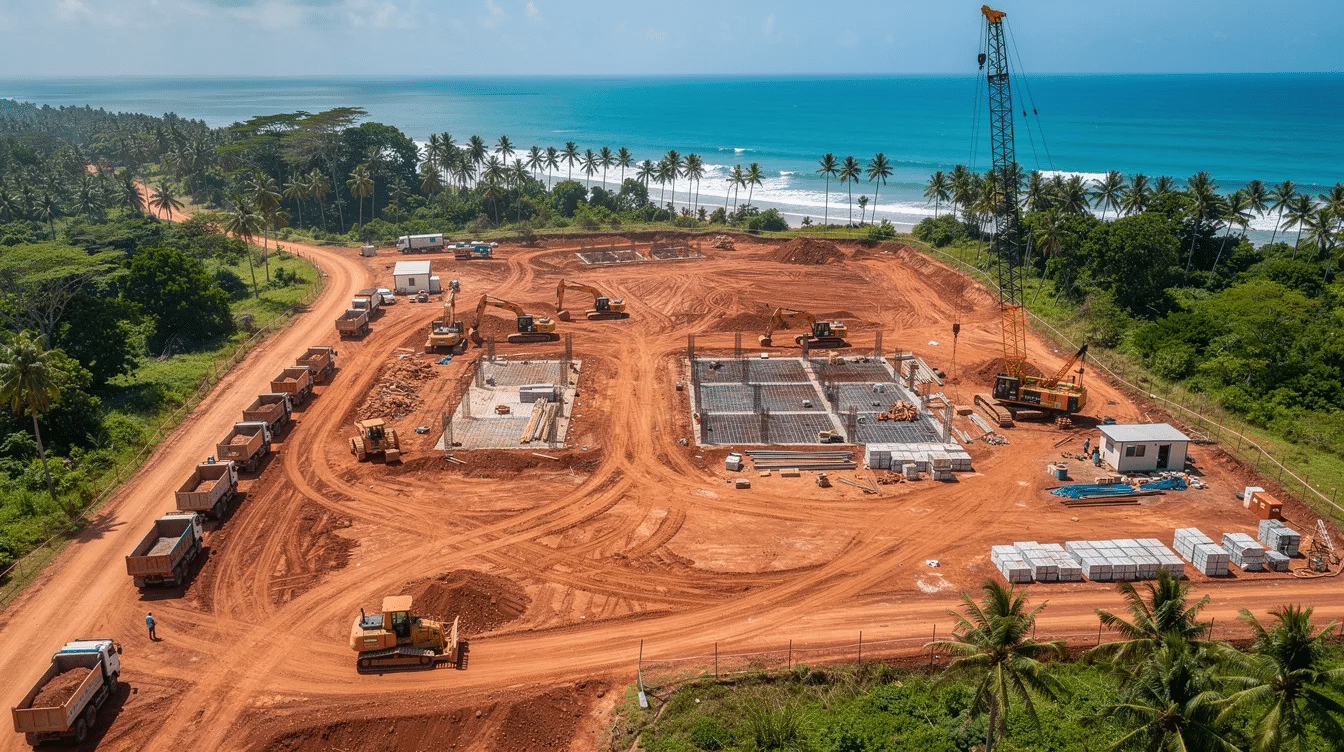
- Lahaina and Upcountry work involves debris removal, demolition, utilities, and vertical rebuilding on exposed parcels with limited shade, water, and cooling infrastructure.
NAVFAC and Pearl Harbor
- Oahu military construction often combines steel, concrete, shipyard surfaces, security gates, and access rules that can slow emergency medical services if not planned.
Tourism Infrastructure
- Resort renovations, airport upgrades, and visitor-economy work across Oahu, Maui, Kauai, and Hawaii Island often coincide with peak-season milestones.
State Housing and Infrastructure
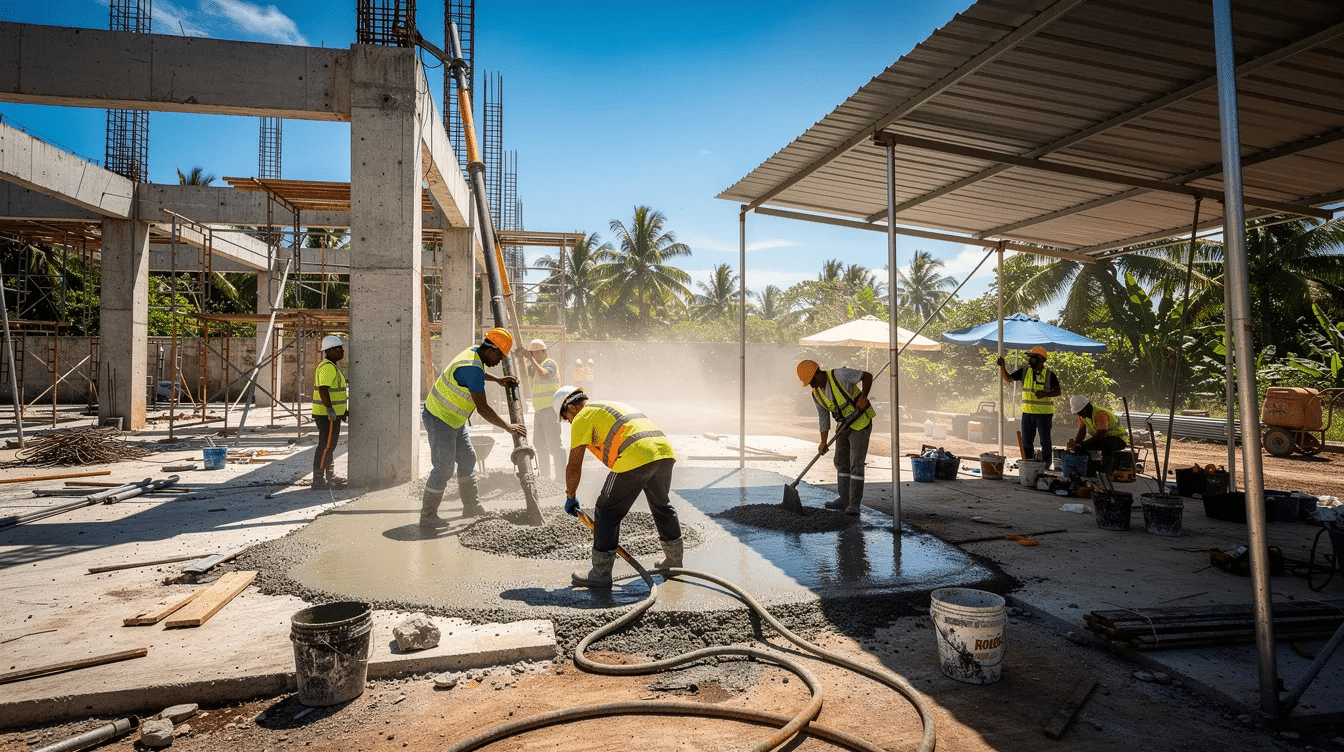
- Honolulu mid-rise work, Hawaii Island roadwork, and Kauai sitework face reflected heat from asphalt, aggregates, and concrete.
Workforce Impact
- Hawaii’s high cost of living and constrained labor pool mean every heat-related illness increases workforce need, overtime, and schedule risk.
Core Elements of a Hawaii-Ready Heat Illness Prevention Program
Use this checklist before the 2026 summer peak:
1. Write the Plan
- Develop a heat illness prevention program covering hydration, rest breaks, engineering controls, acclimatization, emergency plan procedures, and job site responsibilities.
2. Assign Supervisors
- Designate foremen to monitor conditions, authorize frequent breaks, and stop tasks when body temperature rises to unsafe levels.
3. Plan Water and Recovery
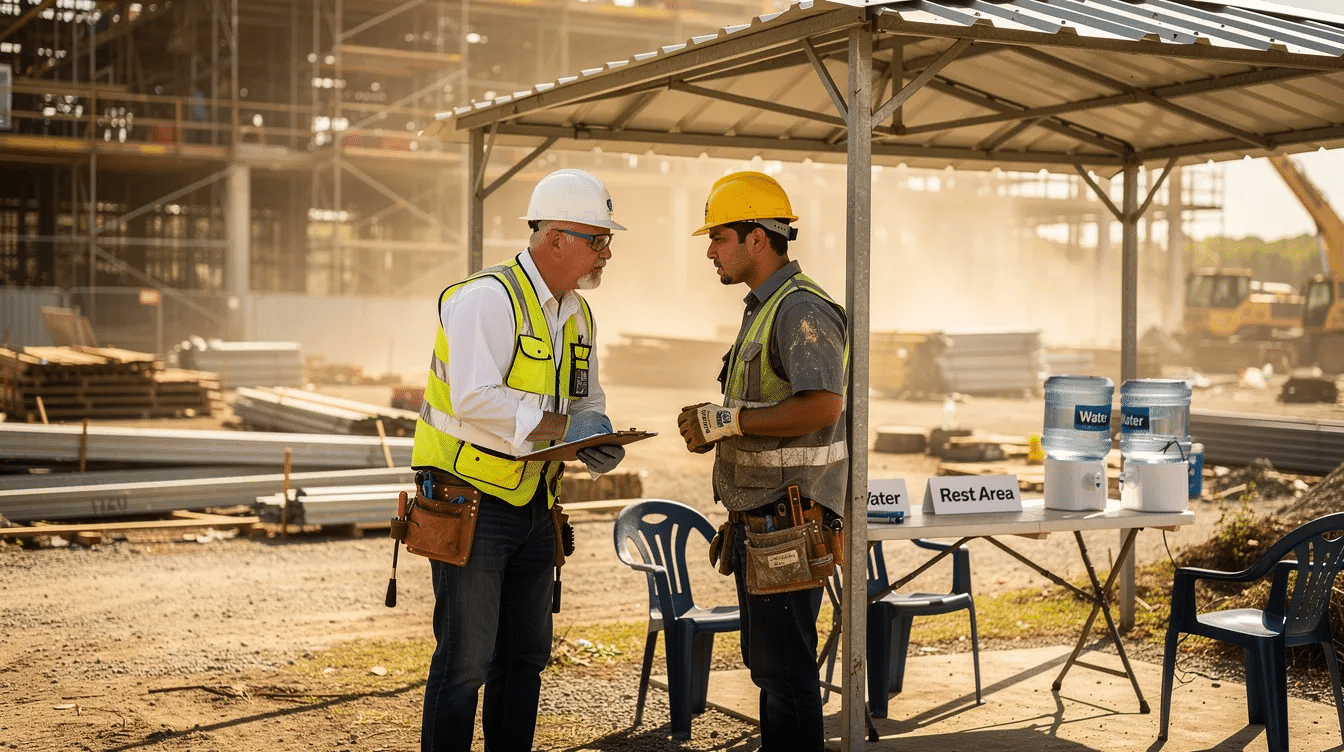
- Provide cool water, electrolytes where appropriate, and shade or air-conditioned recovery close to the work face.
4. Phase Exposure
- Gradually acclimatize new workers or those returning from time off over a one to two-week period to build heat tolerance.
5. Schedule Smart
- Schedule physical tasks during the coolest parts of the day, such as early morning or late evening, to reduce heat exposure.
- Adjust starting times to avoid the hottest parts of the day, especially during summer months.
6. Control the Environment
- Implement engineering controls such as pop-up tents, misting fans, shade tarps, improved air flow, and cooling gear.
- Combine engineered controls, hydration, mandatory rest periods, and worker acclimatization.
7. Train in Crew Languages
- Encourage workers to report heat-related symptoms early.
- Use Tagalog, Ilocano, Chuukese, Spanish, and pictograms where needed.
8. Connect to ABC Hawaii
- Use STEP documentation and chapter safety training to standardize heat stress safety across construction projects.
Understanding Heat Illness: From Heat Rash to Heat Stroke
Heat-related illnesses (HRIs) include heat stroke, heat exhaustion, heat cramps, and heat rash, which can progress rapidly if not treated.
Common Heat Illnesses and Symptoms
- Heat Rash (Prickly Heat):
- Skin irritation caused by sweat trapped under clothing, harnesses, tool belts, and PPE.
- Persistent heat rashes should be reported.
- Heat Cramps:
- Painful muscle spasms in legs, arms, or abdomen.
- Signal fluid and electrolyte imbalance.
- Heat Exhaustion:
- Symptoms: excessive thirst, headache, weakness, nausea, vomiting, muscle cramps, dizziness, heavy sweating, clammy skin.
- First Aid: Stop work, move the worker to shade, provide fluids if alert, and monitor.
- Heat Stroke (Medical Emergency):
- Symptoms: confusion, high body temperature (above 103°F), lack of sweating (or continued sweating in high humidity), dry or clammy skin, seizures, collapse, altered behavior.
- First Aid: Call 911, move to shade, cool aggressively with wet cloths, misting, fanning, and ice packs, monitor breathing and pulse.
Training programs should include guidance on identifying common symptoms of heat stress and providing basic first aid if an episode occurs, as this knowledge can save lives.
Monitoring Conditions: Heat Index, WBGT, and Practical Field Tools
- The heat index combines air temperature and humidity. WBGT (Wet Bulb Globe Temperature) accounts for radiant heat and air movement, making it better for rooftops, paving, bridge decks, and exterior work.
- Employers should use handheld WBGT meters for real-time environmental monitoring to adjust work conditions as needed.
- Use the National Weather Service forecast, job site readings, and the OSHA-NIOSH Heat Safety Tool.
- Document readings at set times, especially when the National Weather Service issues a heat advisory or warning.
- Tie frequent rest breaks, task rotation, and rescheduling to heat index or WBGT ranges.
- Post color-coded heat safety charts on gang boxes, trailers, and water stations.
Hydration and Rest Logistics for Island Jobsites
Remote work on Maui, Kauai, and Hawaii Island requires planning before crews arrive.
Water Placement
- Construction workers should drink at least one cup (8 oz.) of cool water every 15 to 20 minutes to maintain proper hydration and prevent heat illness, even if they do not feel thirsty.
- Place water at the work face, not only in the parking area.
- Budget for ice, insulated containers, pop-up tents, and deliveries at the bid stage.
Break Scheduling
- Scheduled breaks in shaded or air-conditioned areas are critical for managing heat stress during high-temperature shifts.
Cooling Strategies
- Use convective cooling with fans where possible; better airflow and air movement help sweat evaporate.
Energy Drink Guidance
- Discourage high-caffeine energy drinks during intense heat.
Acclimatization in a Mobile, Inter-Island Workforce
Acclimatization is the body’s response to repeated heat exposure. It can take up to two weeks for a healthy construction worker to acclimatize to a hot environment, making it crucial for new workers to gradually increase their exposure to heat.
Acclimatization Timeline
- New workers and employees returning after more than a week away should ramp up over 7–14 days.
Worker Transitions
- Workers moving from cooler elevations on Hawaii Island to low-lying Maui or Oahu may need partial re-acclimatization.
- Mainland hires from cooler regions in spring 2026 may need conservative assignments.
Tracking and Pairing
- Track acclimatization on rosters.
- Pair unacclimatized workers with experienced crew members who can spot the risk of heat exhaustion and heat stroke.
Susceptibility Factors
- Dehydration, low physical fitness, certain medications, and lack of acclimatization increase individual susceptibility to heat stress.
Buddy Systems and Multilingual Communication on Diverse Crews
A buddy system only works when it is assigned, trained, and reinforced.
- Use buddy pairs for roofing, paving, exterior painting, rebar, steel erection, and structural concrete.
- Post pictogram charts showing heat rash, heat cramps, heat exhaustion, and heat stroke.
- Employers are encouraged to share and discuss signs and symptoms of heat-related illness during onboarding, training, and safety huddles to build a strong safety culture.
- Include “buddy check” prompts in morning huddles and mid-shift pauses.
- Make early reporting of professional behavior, not weakness.
Emergency Planning: Responding to Heat Exhaustion and Heat Stroke
Time matters. Every major project needs a written emergency plan.
Emergency Response Steps
- Assign who calls 911, who meets EMS, who guides access, and who documents the incident.
- Secure sites such as NAVFAC, Pearl Harbor, and airports must address gate access, escorts, and radios.
First Aid for Heat Illness
- For suspected heat exhaustion:
- Move the worker to shade or air conditioning.
- Loosen clothing.
- Offer cool water if conscious.
- Monitor for improvement.
- If heat stroke is suspected:
- Activate 911 immediately.
- Cool aggressively with wet cloths, misting, fanning, and ice packs.
- Monitor breathing and pulse.
- Seek medical attention whenever symptoms worsen or do not resolve quickly.
- Run drills before peak 2026 conditions on Maui rebuilding sites and remote utility or road jobs.
Integrating Heat Stress into ABC Hawaii STEP and Safety Training
ABC Hawaii members should treat heat illness prevention as part of everyday safety management, not a seasonal add-on.
- Use STEP to document policies, heat-stress training, hydration practices, incident reviews, and field verification.
- ABC Hawaii’s safety and OSHA training can connect heat stress, heat exhaustion, heat stroke, and first aid to Hawaii’s year-round tropical climate.
- Apprenticeships and craft training in carpentry, electrical work, plumbing, painting, and roofing should teach workers to drink water, gradually tolerate heat, recognize symptoms, and use the buddy system from day one.
The Business Case: Productivity, Workforce Stability, and Project Reliability
Unmanaged heat stress slows production, increases rework, and raises the risk of injury. The risk of occupational injury increases by 17.4% during heat waves, with construction workers facing a particularly high risk due to the physical demands of their work and outdoor exposure.
- Visible water access, shade, rest breaks, and responsive supervisors support recruiting and retention.
- Reliable heat illness prevention also protects schedules on Maui rebuilding, military facilities, state housing, and tourism infrastructure, where every lost workday hurts.
Conclusion: Hawaii Contractors Need Durable Heat Programs, Not Federal Cycles
HIOSH state-plan status means Hawaii construction employers cannot tie heat illness prevention to federal OSHA cycles. The mainland debate matters, but local obligations remain active.
Hawaii’s climate requires written plans, engineering controls, acclimatization, hydration, rest breaks, and field-level accountability. For ABC Hawaii members, the next step is to review plans, update STEP documentation, and use safety training before peak 2026 conditions arrive.
Frequently Asked Questions about Heat Stress in Hawaii Construction
How often should crews in Hawaii receive heat illness training?
- Supervisors and field workers should receive formal heat-illness prevention training at least annually, with refreshers before peak heat and whenever new workers join.
- During extreme heat, weekly toolbox talks should reinforce awareness of heat-related symptoms, hydration, rest breaks, and emergency response procedures.
Is a written heat illness prevention plan required for small contractors?
- Under Hawaii’s state plan, employers responsible for construction workers exposed to heat are expected to assess hazards and implement protections regardless of company size.
- A written plan is the most defensible way to show HIOSH that reasonable steps were taken to prevent heat-related illnesses.
What role can engineering controls play on island construction sites?
- Engineering controls reduce heat stress before relying on PPE alone.
- Examples include portable shade, misting fans, reflective materials where specified, temporary cooling stations, improved airflow, and scheduling heavy work when heat sources and temperatures are lower.
How should contractors handle heat risk for crews who commute long distances or live without air conditioning?
- Supervisors should assume some workers may arrive with elevated body temperature.
- Adjust assignments, provide early hydration, encourage workers to report fatigue, and use frequent rest breaks so the crew can reduce heat stress before heat strain escalates.
Where can ABC Hawaii members find support to improve their heat illness prevention programs?
- ABC Hawaii members can use safety training, OSHA education, STEP resources, member networking, and workforce development programs to strengthen heat illness prevention.
- The goal is practical: protect workers, document compliance, and keep Hawaii projects moving.