
You hear a lot about artificial intelligence these days. It feels like it’s everywhere. You probably think it has no place in a hands-on industry like construction, right?
But what if I told you it’s not about robots laying bricks? It’s about making your job easier and your projects run smoothly. The truth is that an AI construction design-build process helps connect your teams in ways that just were not possible before.
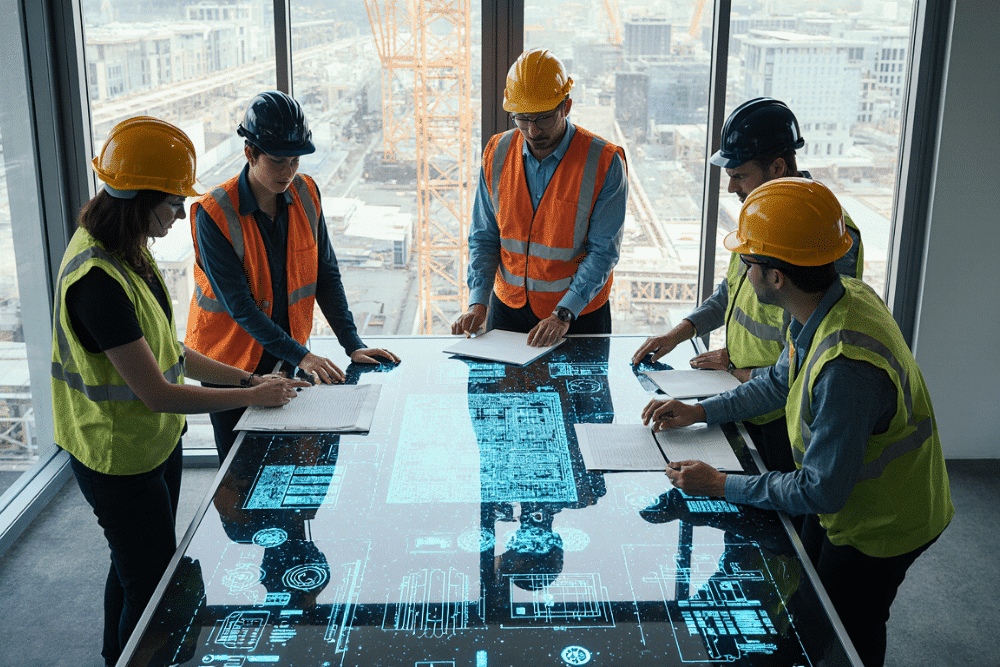
The design-build model is all about collaboration from the start. Adding AI gives that collaboration a serious boost. You get a more innovative way to build through an AI construction design-build framework that uses data to bring everyone together.
ABC Central Texas offers safety classes for our members online and in person. We offer OSHA training through a partnership with UT Arlington with classes held in our office. We also hold monthly CPR classes.
Let’s get one thing straight. AI is no longer just a sci-fi concept. It’s a practical tool that helps people on the ground do their jobs better.
Think of it as the world’s best assistant. It can analyze mountains of information from past construction projects and uncover patterns humans would miss. This is a game-changer for the design-build method and the entire construction sector.
At its core, construction AI uses subsets of artificial intelligence, such as machine learning and deep learning, to analyze data. Machine learning algorithms improve from experience, getting smarter with every project. This allows them to predict outcomes and identify risks with increasing accuracy over time.
These AI technologies can process both structured data, such as spreadsheets and sensor readings, and unstructured data, such as photos and blueprints. The system extracts structured information from these varied sources to create a complete picture of the project. This gives one team a unified brain, ensuring the design folks, estimators, and project managers see the same information.
You’ve been there. A project gets delayed because of bad weather that no one saw coming. Or maybe you had issues getting the right materials at the right time due to rising costs.
AI scheduling software is like a crystal ball for your project timeline. It looks at historical project data, such as weather patterns in your area and typical labor output. It can then predict potential slowdowns before they ever happen.
Imagine planning a big project in Hawaii where you know rain can be an issue. A predictive AI tool using predictive analytics can run dozens of what-if scenarios. You can see how a week of storms would impact your entire schedule and then adjust your plans right from the start.
This approach allows construction teams to stop reacting to problems and start getting ahead of them. According to a McKinsey study, projects that use digital planning tools can achieve significant improvements in their schedules. For design-build teams, this means better coordination and less risk for everyone involved.
Beyond scheduling, AI helps streamline workflows throughout the entire project lifecycle. It can optimize resource allocation, suggesting the best time to order materials or schedule subcontractors. This level of operational efficiency minimizes downtime and keeps the project moving forward.
Another powerful application is predictive maintenance for heavy equipment. AI systems can monitor machine performance and sensor data to forecast when a piece of equipment is likely to fail. This allows maintenance to be scheduled during planned downtime, preventing costly, unexpected breakdowns on the job site.
By automating these administrative tasks, project managers are freed up to solve issues that require human intelligence and expertise. The system continuously analyzes data, allowing managers to focus on leadership and critical decision-making. AI is increasingly playing a crucial role in making site operations more fluid and efficient.
If you’re thinking about what comes after high school, compare your options. ABC Hawaii’s Trade School offers a hands-on path to a real career—without the student debt.
Nothing is more important than ensuring every person goes home safely at the end of the day. Safety programs are the backbone of any good construction company. But AI can help make them even stronger and enhance safety across construction sites.
Modern systems use cameras and AI for image analysis on construction sites. These AI tools can spot potential problems, such as someone not wearing a helmet or entering a restricted zone. They can also track heavy equipment movement to warn people who get too close, preventing accidents before they occur.
This is not about Big Brother watching you. It is about getting an early warning to improve safety. A project manager receives an alert about potential safety hazards and can address them before anyone gets hurt, which is vital to keeping workers safe.
In hot climates, some AI systems monitor for heat stress by checking environmental conditions. This information can be used in the daily safety meeting to prevent heat-related illnesses. A superintendent can say, ‘Guys, the system shows it’s going to get really hot by 2 PM, so let’s make sure we’re hydrating.’
That kind of real-time project data helps reinforce a culture where everyone looks out for each other. Automatically identifying safety non-compliance allows managers to focus on coaching and positive reinforcement. AI’s potential to reduce accidents makes it one of the most critical areas in which AI is impacting the industry.
| Feature | Traditional Safety Monitoring | AI-Enhanced Safety |
|---|---|---|
| Hazard Detection | Relies on manual human observation. | Continuous, automated monitoring for potential safety hazards. |
| Response Time | Delayed, based on when an issue is reported. | Instant alerts sent to project management for immediate action. |
| Data Analysis | Based on past incident reports, often lagging. | Predictive analytics identify high-risk areas before incidents occur. |
| PPE Compliance | Spot checks by a safety manager. | AI image recognition detects non-compliance in real time. |
| Worker Engagement | General warnings during safety meetings. | Personalized alerts and data-driven safety talks. |
Waste is a big deal in construction, both in time and materials. AI is helping change that during the design phase. It can help create buildings that are stronger, greener, and cheaper to build.
Software that uses generative design can generate hundreds of structural options for a building in minutes. It then analyzes each one for cost, strength, and energy performance. This process would take a team of engineers weeks to do manually.
This means your architects and engineers can work directly with estimators to pick the best option. This approach helps the AEC industry enhance collaboration and build smarter. You can identify these problems before a single shovel hits the dirt, significantly improving design processes.
A Florida company, GCM Contracting Solutions, recently used this on a marina project. The AI helped them figure out the best layout for concrete wall panels. The final result used less concrete and cut down the construction phase, all without affecting the building’s strength.
These benefits are not just for marinas; many AEC firms are discovering this. This technology applies to everything from massive warehouses to your next multifamily housing project. It helps you deliver a better building for your client while hitting sustainability goals.
Effective project management is the lifeblood of successful construction firms. AI technology provides powerful new capabilities to managers, helping them oversee projects with greater precision. It helps track project progress against timelines and budgets in real time.
AI tools can automate reporting, freeing managers from hours spent compiling data. Instead, they receive daily or weekly dashboards that highlight key performance indicators and potential problem areas. This shift allows for proactive rather than reactive management, saving time and money.
Risk assessment is another area where AI excels. By analyzing data from current and past projects, AI can identify patterns that lead to delays or cost overruns. This gives construction companies a decisive advantage in mitigating risks before they escalate.
An AI assistant can also handle routine inquiries, answering questions from stakeholders about project status in natural language. This fosters seamless communication and lets the human team focus on more complex tasks. The ability to enhance efficiency in this way is a significant benefit for busy construction teams.
At ABC Hawaii, we believe safety is the cornerstone of a successful construction industry. That’s why we offer a diverse range of safety training programs tailored to meet the unique needs of our members. With both online and in-person options, our training provides the flexibility to suit any schedule or learning preference.
You want your clients to trust you. But it can be hard when they feel they don’t know what’s going on. Weekly progress meetings only go so far.
AI is improving how you talk to clients by giving them a clear window into the project. Digital dashboards powered by AI can display owners’ schedules, budgets, and other performance metrics in real time. They can log in anytime and see exactly where things stand.
This builds a massive amount of trust. Instead of calling you with a question, they can see the answer themselves. When changes occur, they can instantly see how they affect the timeline or costs.
This kind of open-book approach is a perfect fit for the design-build model. It reduces confusion and makes sure everyone, from the owner to the subcontractors, is on the same page. The data makes communication clear and efficient, which reinforces the client’s confidence in your work.
The most innovative tech on your jobsite is getting connected. AI is the brain, but automation and robotics are becoming the hands and feet. This is where the future of the construction industry gets really interesting.
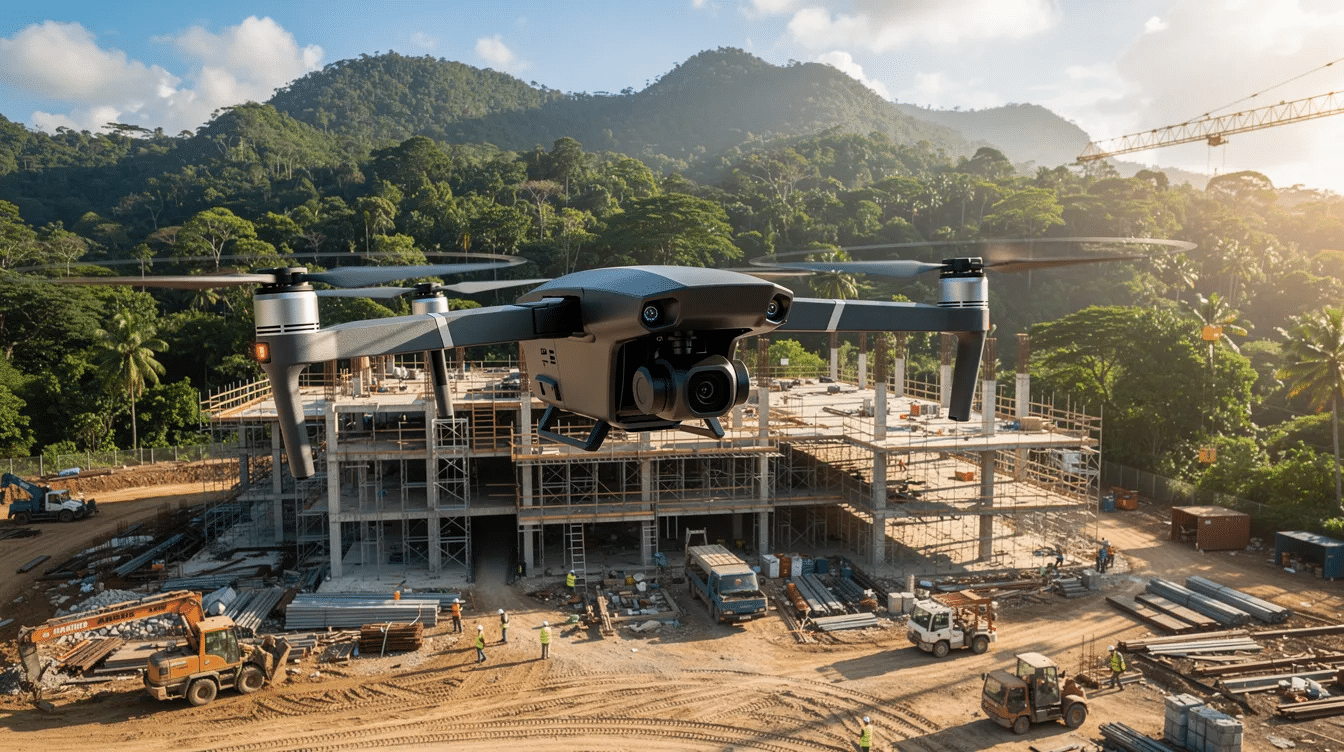
You’re already seeing more automation in the field. Drone surveying maps out sites with incredible accuracy. Robotic systems can even perform tasks like marking layouts on a concrete slab faster and with fewer errors than a human crew, including many repetitive tasks.
All these tools are collecting a ton of data. When you feed that data into an AI system, it learns. It can then help you refine your plans for the next project or improve your quality control, demonstrating AI’s transformative potential.
Some forward-thinking companies are building automated facilities for storage and retrieval. These buildings use AI and robots to manage inventory. The lessons learned during construction on how to integrate this technology ensure the final building performs better for decades.
This is a significant shift for our industry, as noted by industry experts. AI will not only change how we build buildings. As Deloitte points out, this connection between data and operations is a significant factor in how AI will shape the future of building.
At the end of the day, construction is and always will be about people. It’s about trust between a contractor and a client. It’s about the craftsmanship of a skilled worker on the jobsite.
Technology is here to support those people, not to replace them. It’s a tool that can amplify our skills and help us fix long-standing problems in the construction industry. The goal is to improve productivity and let human creativity flourish.
By embracing AI construction design-build methods, you can improve planning, make job sites safer, and deliver projects that truly meet the needs of the future. The spirit of building is about constant improvement, and this is just the next step.